Skip to content
TruckBedCoverFinder

Uncategorized 19 min read

How to Measure Your Truck Bed for a Tonneau Cover That Fits

A 5.5-ft bed isn't 66 inches. Learn how to measure a truck bed for a tonneau cover with a 9-point checklist that prevents costly wrong-fit returns.

admin-truck

Editorial team · TruckBedCoverFinder
Published · Updated

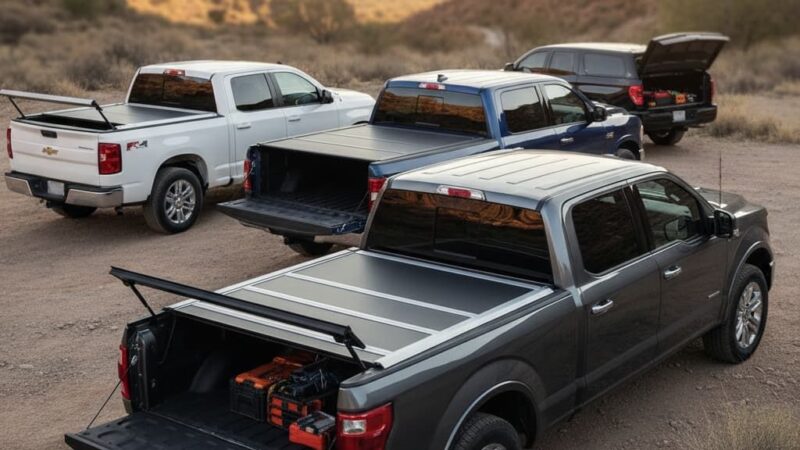
Truck bed tonneau cover types

A 5.5-foot truck bed is not 66 inches. It’s closer to 67.4 on a 2024 F-150, 64.0 on a Tacoma, and 62.5 on a Ridgeline – and that gap is why roughly a third of tonneau returns at retailers like RealTruck and AutoAnything come back tagged “wrong fit,” not “defective.” The cover did its job. The spec sheet did its job. The buyer measured the marketing name instead of the rails.

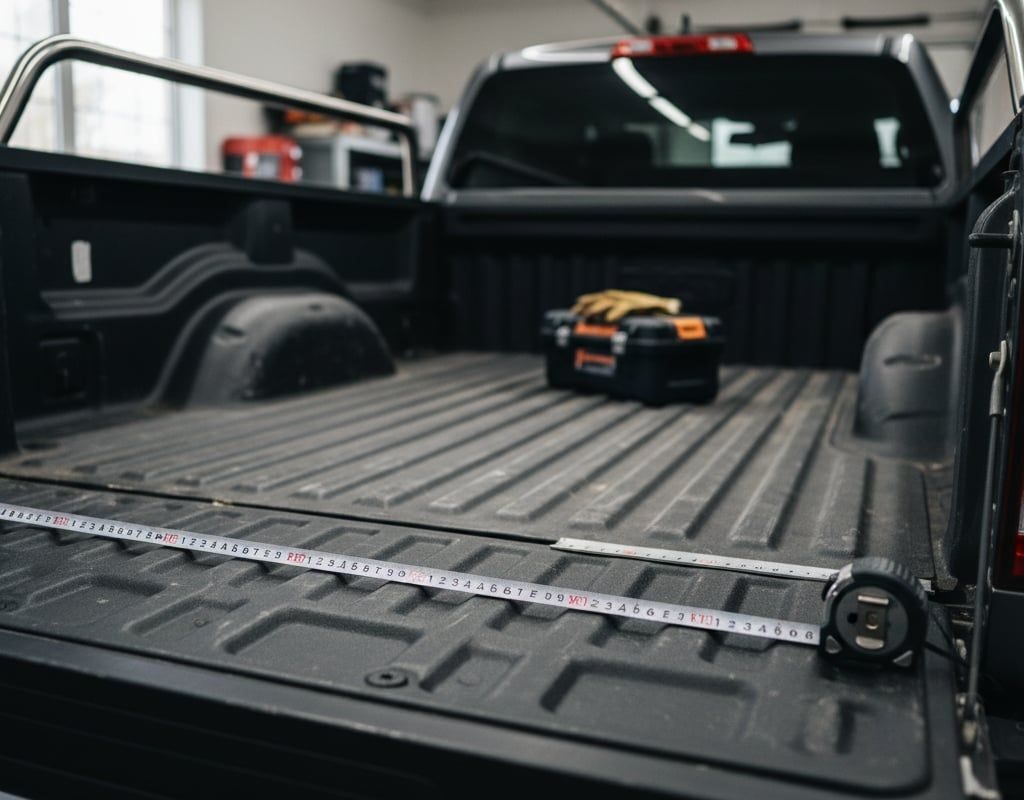
This is a pre-purchase checklist, not a sales pitch. Grab a 25-foot tape, ten minutes, and a notepad. We’ll walk through bed length to the nearest eighth-inch, rail height, bulkhead clearance, tailgate type, spray-in liner thickness, and the awkward extras – RamBox, factory racks, fifth-wheel prep, tie-down tracks – that quietly kill fitment after the box arrives.

The 9-Point Pre-Purchase Fitment Checklist

Screenshot this list before you open a single product page. Nine answers stand between you and a return shipping label.

The biggest fitment failures aren’t about brand or budget. They’re about one missing measurement or one overlooked accessory bracket. Work through every item below with a tape measure in hand and the truck in front of you – not from memory.

  1. Exact bed length, measured. Tape from the inside of the bulkhead to the inside of the closed tailgate. A “6-foot” bed is often 6’4″ or 6’7″ – covers are sold to the actual inch.
  2. Model year and generation. A 2020 Silverado 1500 and a 2019 Silverado 1500 LD share a badge but not a bed profile.
  3. Cab style. Regular, extended, crew – cab choice determines bed length on the same trim.
  4. Factory rail or track system. Ram RamBox, Ford BoxLink, GM CarbonPro – each needs a cover built for that channel.
  5. Bed liner type. Drop-in plastic liners eat 1-2 inches of clamp space; spray-in liners usually don’t.
  6. Tailgate style. Multi-Pro, Multi-Function, or step tailgates change the rear seal geometry.
  7. Toolbox or auxiliary fuel tank. Most standard covers won’t clear either; you need a tool-box-specific SKU.
  8. Bed rack, rails, or stake-pocket accessories. Existing hardware can block clamps or rolling mechanisms.
  9. Fifth-wheel or gooseneck hardware. Hitch prep packages add bolt heads and brackets inside the bed that interfere with rails.

Miss one item and the cover ships, arrives, and goes back. Confirm all nine in writing before you check out.

Why Your Truck Model Name Isn’t Enough

Why Your Truck Model Name Isn't Enough
Why Your Truck Model Name Isn’t Enough

“F-150 SuperCrew” tells a tonneau manufacturer almost nothing. The same cab pairs with three different beds from the factory – 5.5 ft, 6.5 ft, and (on older builds) 8 ft – and ordering by trim name is a leading return reason cited by major retailers like RealTruck.

The fix is boring. Look up your exact bed length, then measure it.

Manufacturers publish “nominal” lengths in marketing copy – 5.5 ft, 6.5 ft, 8 ft. Actual inside-bed measurements run different. A Ford 5.5 ft bed is 67.1 inches. A Ram 5.7 ft bed is 67.4 inches. Three tenths of an inch sounds like nothing until your roll-up cover’s rails hit the bulkhead and won’t seat.

Truck Bed options (nominal) Actual interior length
Ford F-150 (2021+) 5.5 / 6.5 / 8 ft 67.1″ / 78.9″ / 97.6″
Chevy Silverado / GMC Sierra 1500 5.8 / 6.6 / 8.2 ft 69.9″ / 79.4″ / 98.2″
Ram 1500 (DT, 2019+) 5.7 / 6.4 ft 67.4″ / 76.3″
Toyota Tundra (2022+) 5.5 / 6.5 / 8.1 ft 65.6″ / 77.6″ / 97.6″
Toyota Tacoma 5 / 6 ft 60.5″ / 73.7″
Chevy Colorado (2023+) 5.2 ft only 62.0″

Verify your number against the OEM spec sheet for your model year – Ford, GM, and Stellantis all publish them. Then measure. Trim name plus year is a starting point, not an order.

How to Measure Your Truck Bed Length and Width Correctly

How to Measure Your Truck Bed Length and Width Correctly

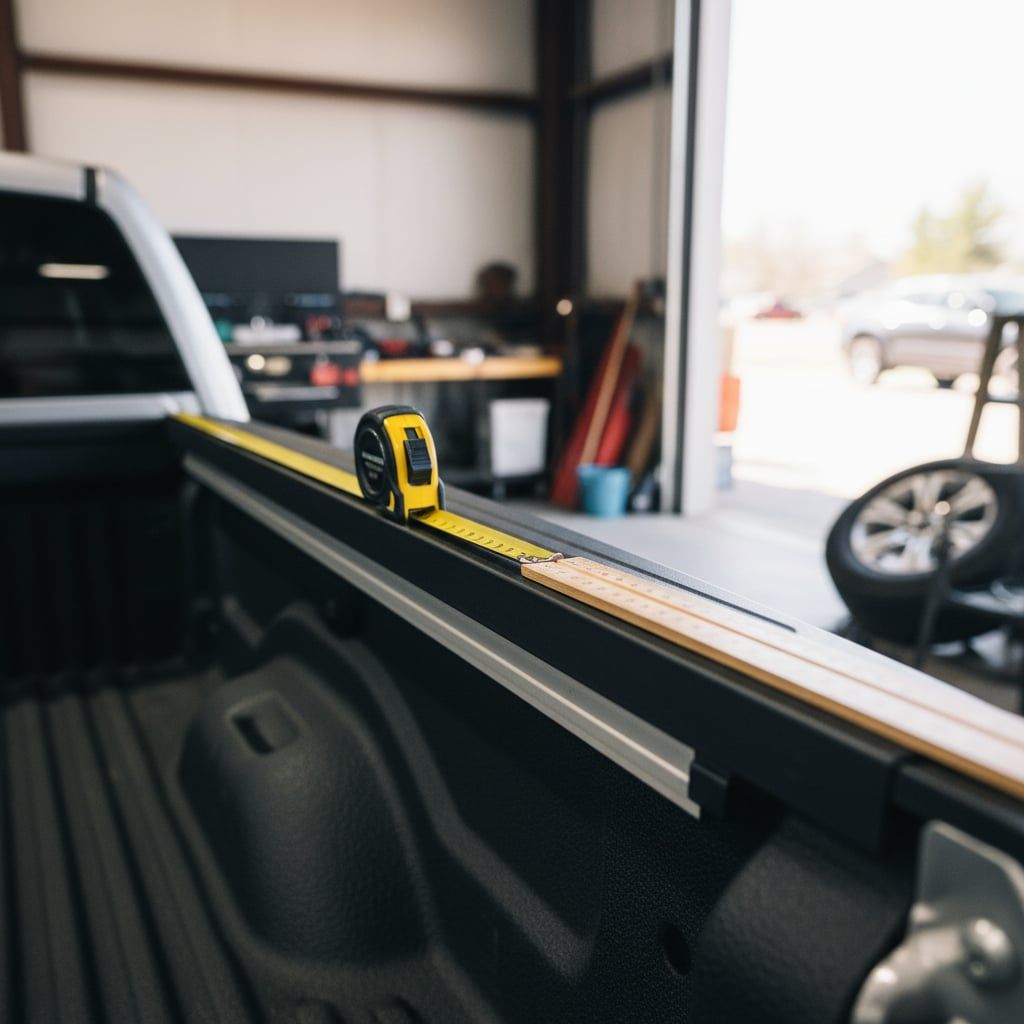
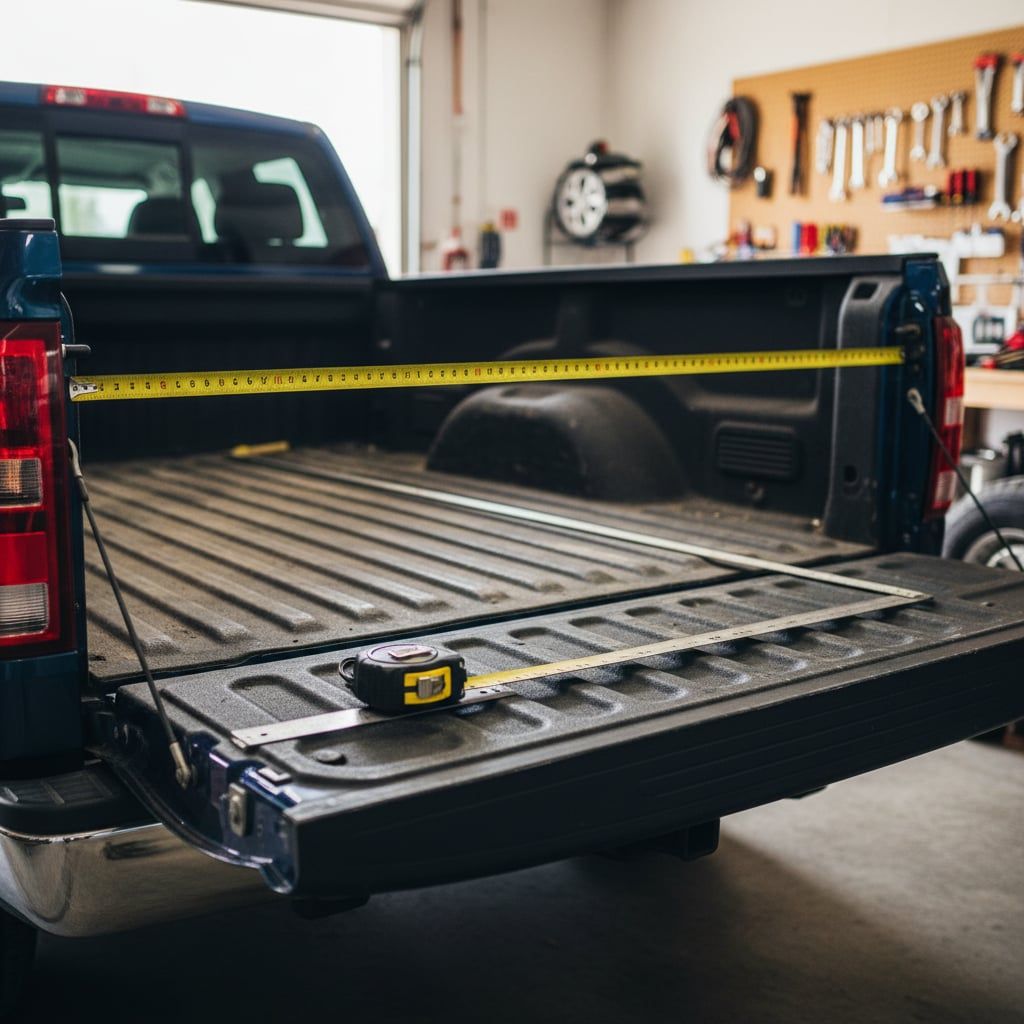
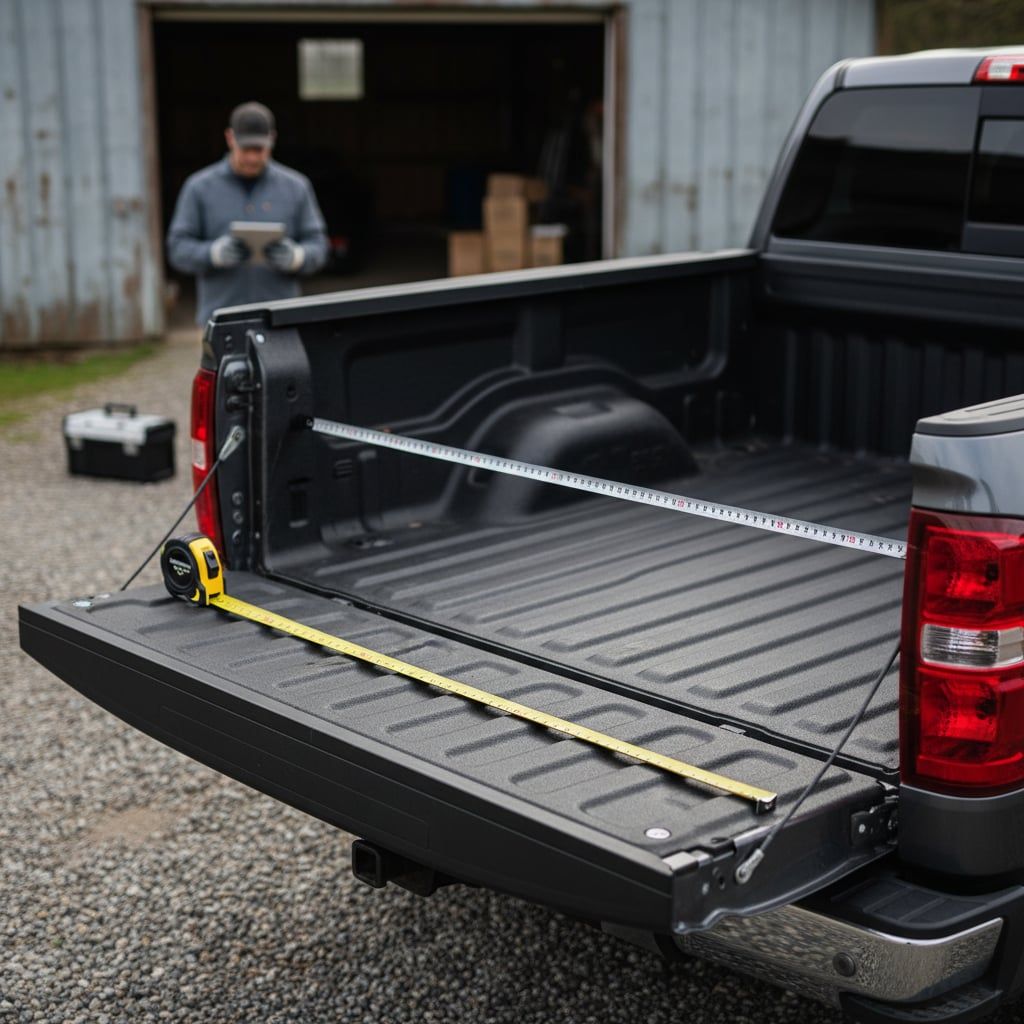
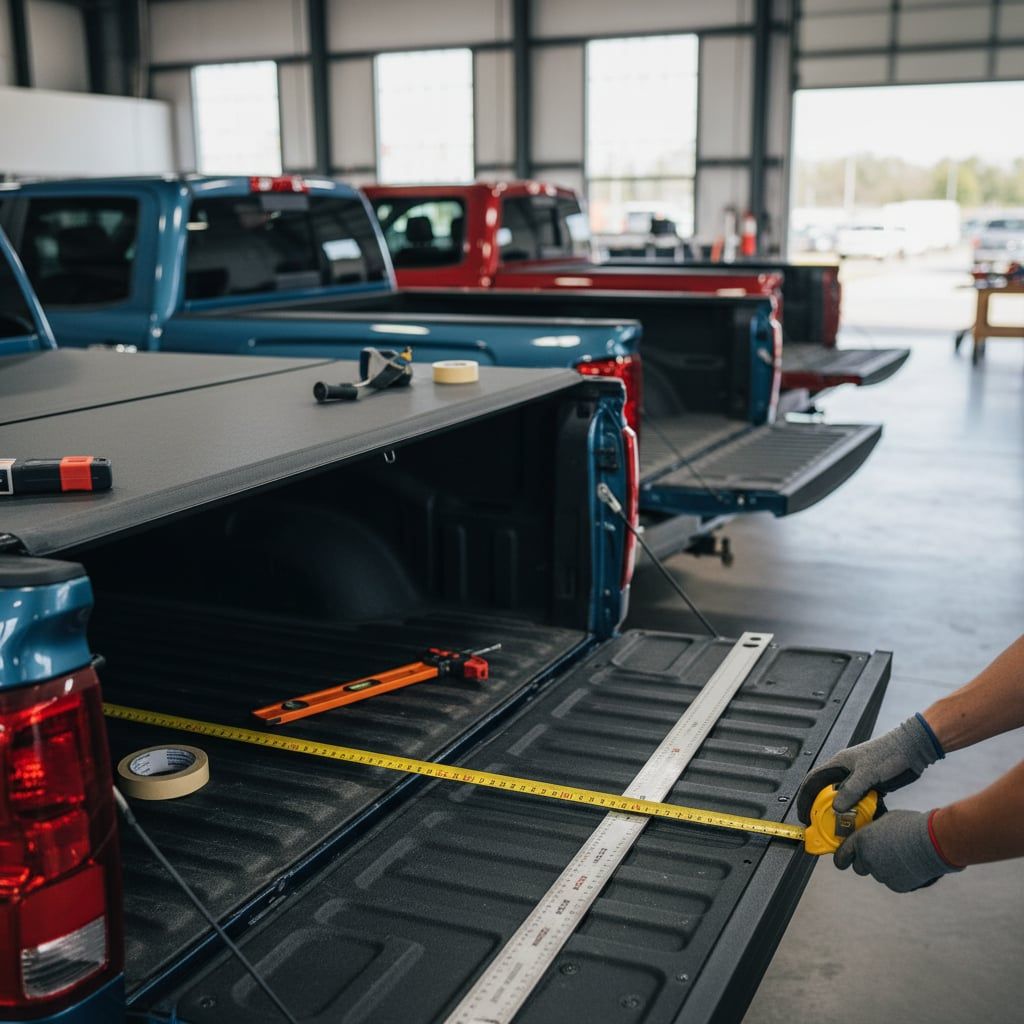
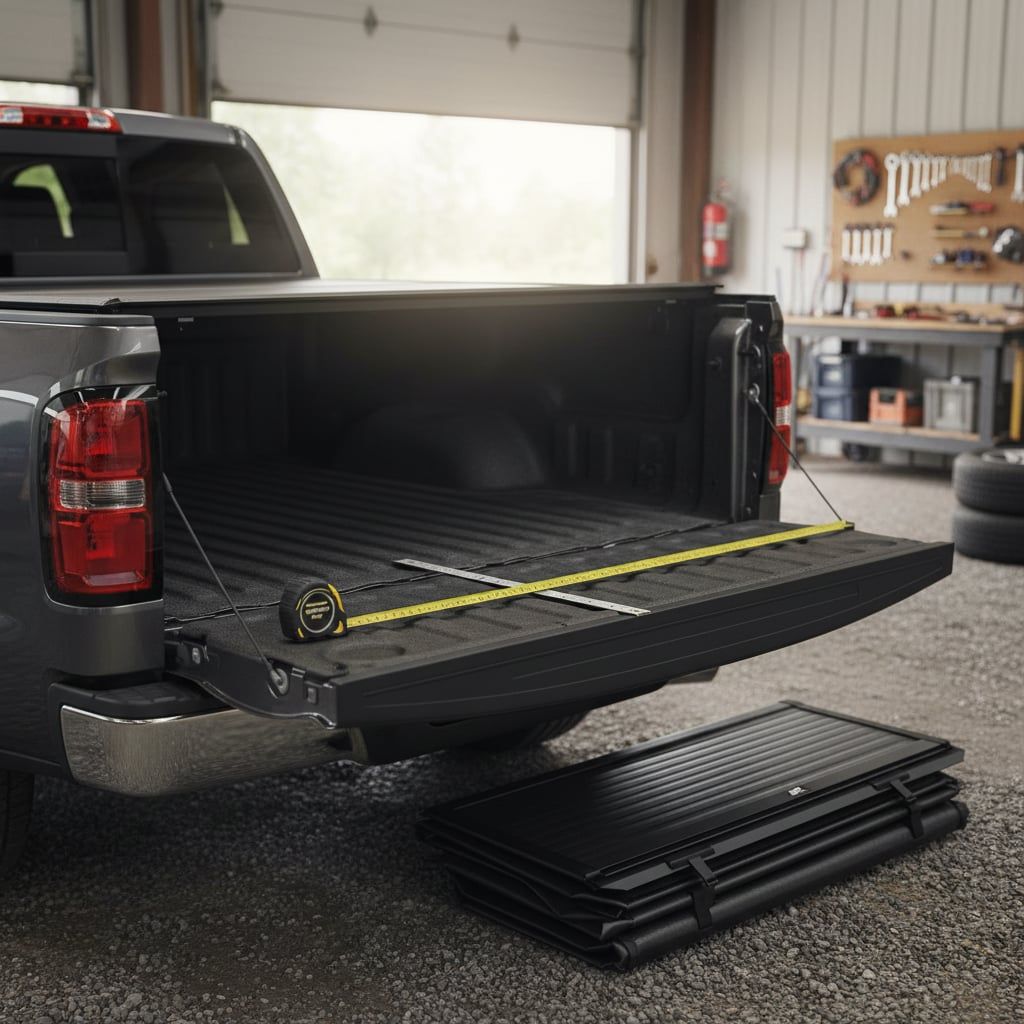
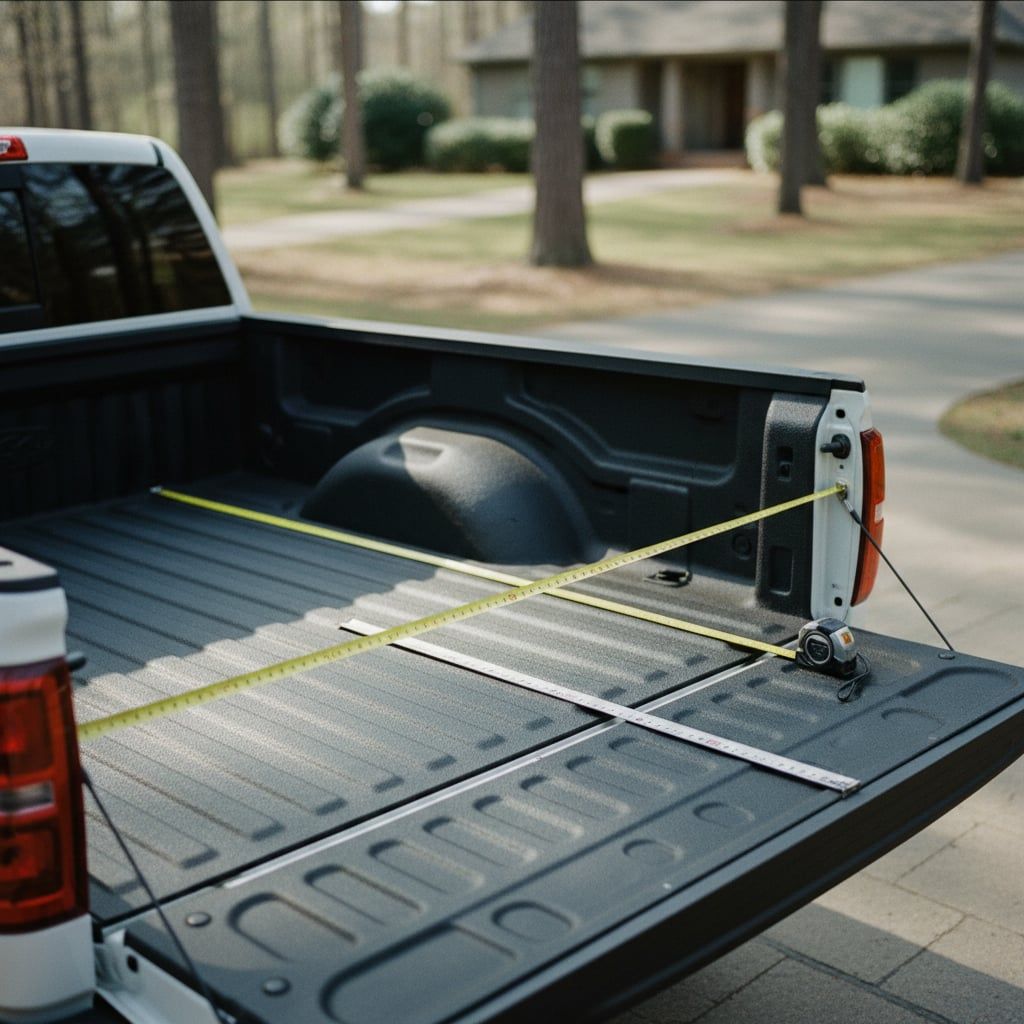
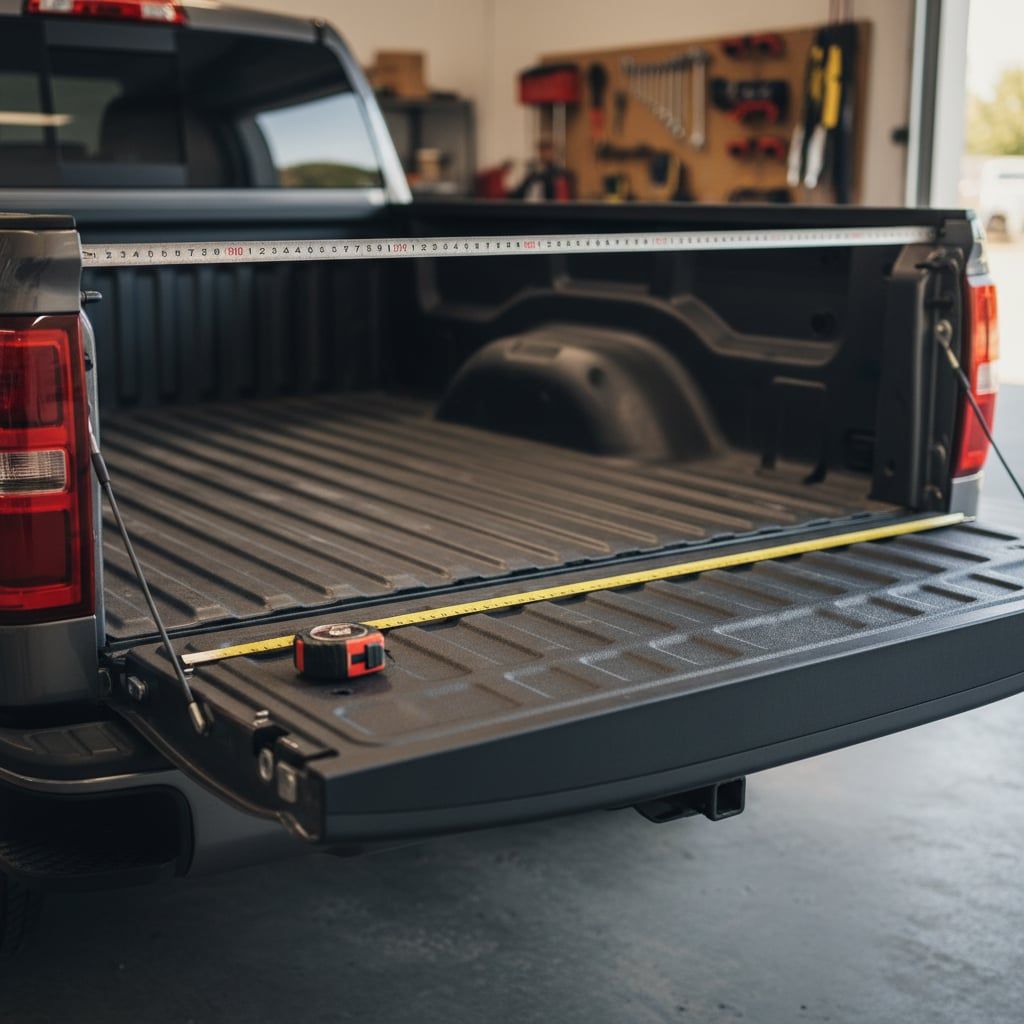
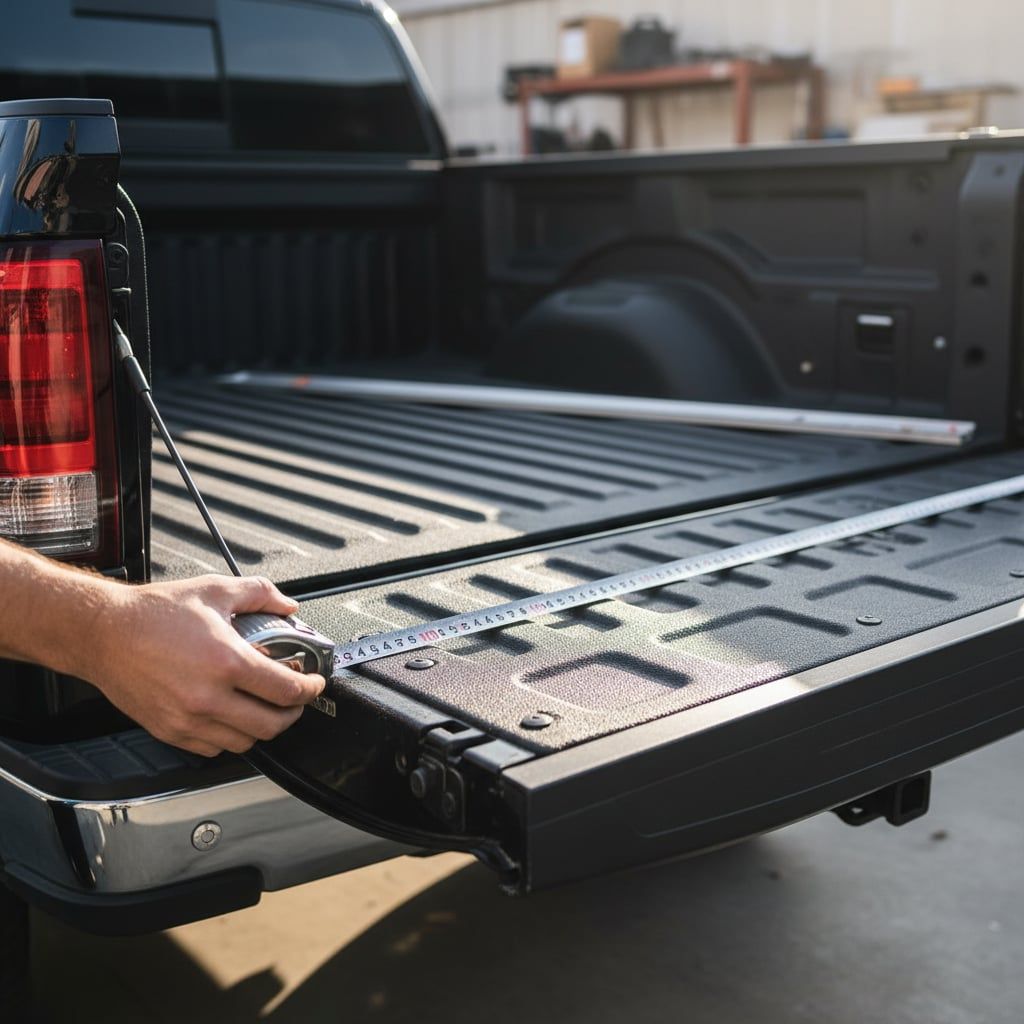
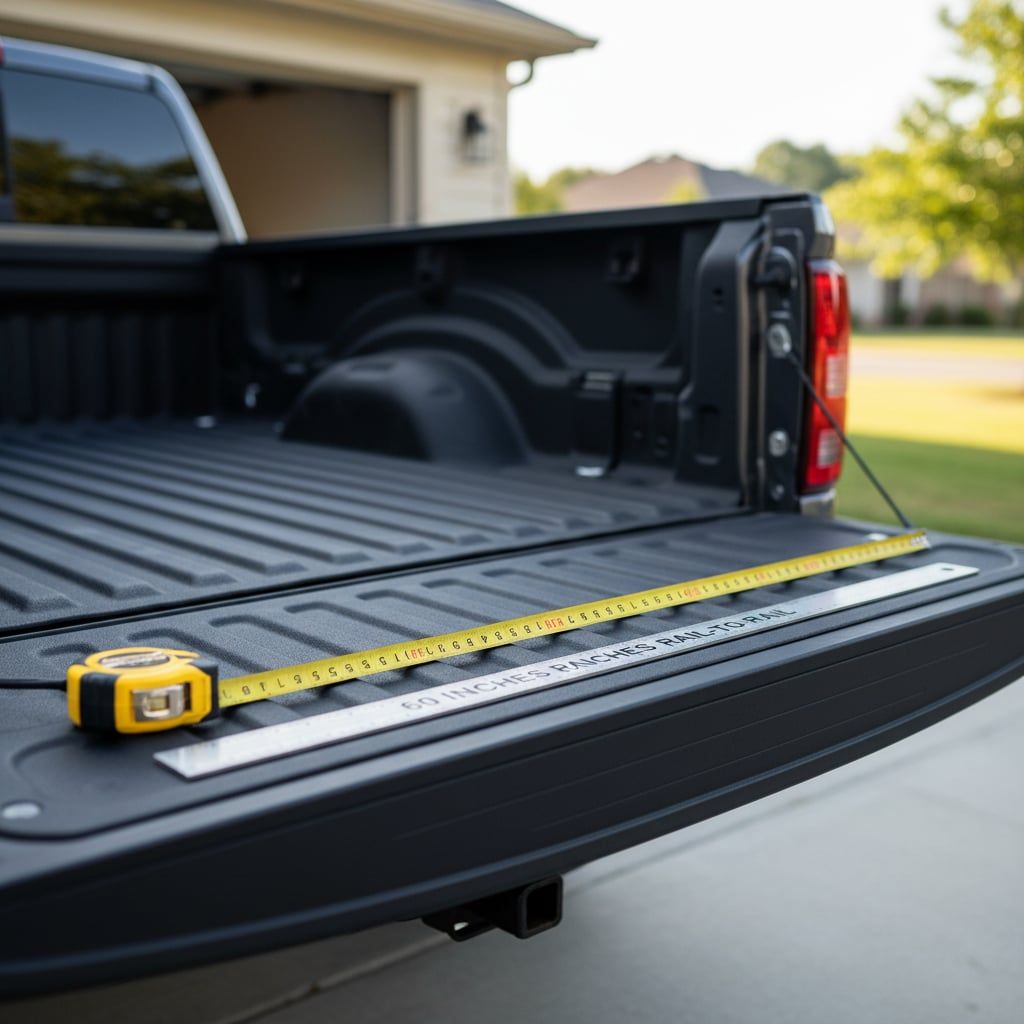
Measure from the inside face of the bulkhead to the inside edge of the closed tailgate seal – nothing else gives a number a tonneau manufacturer can use.

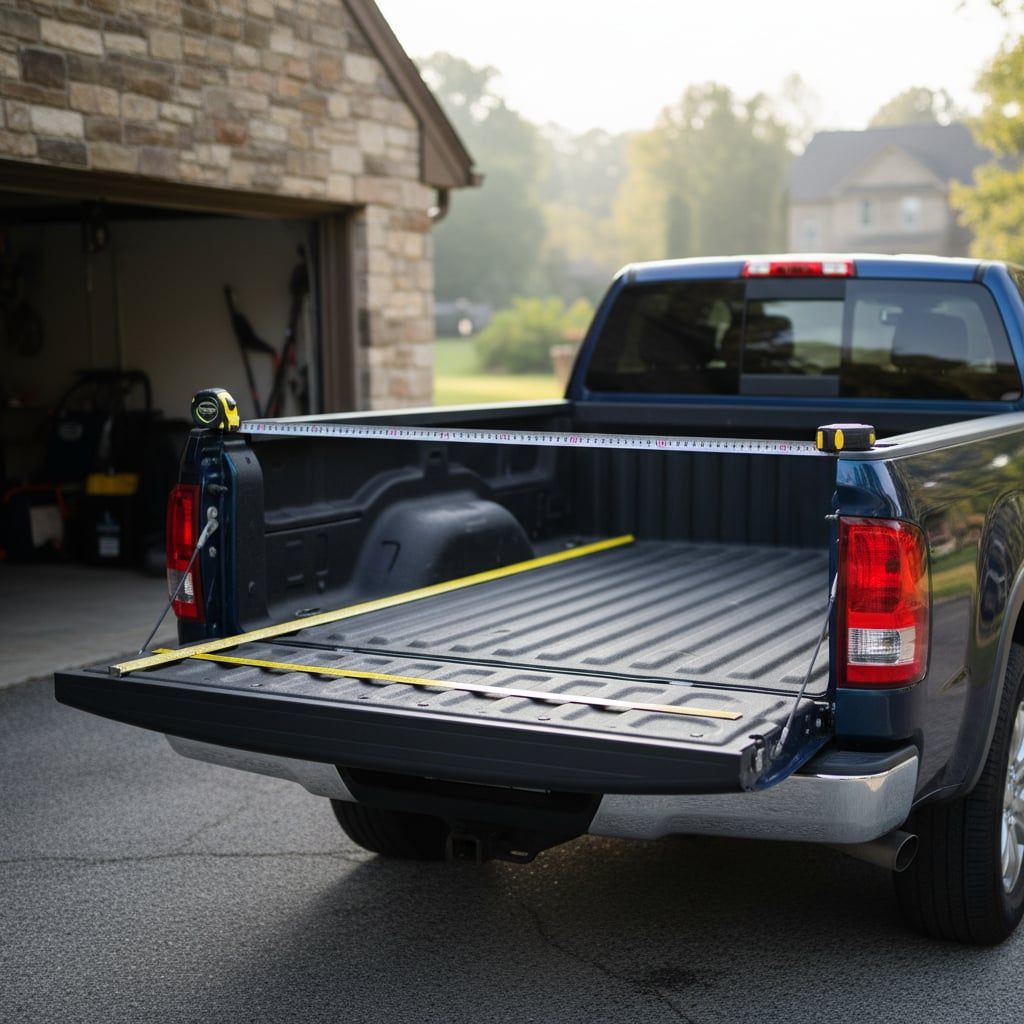
You need three things: a 25-foot tape (steel, not cloth), a notepad, and a helper. The helper matters. A tape sagging across six feet of bed floor reads up to half an inch long, and that’s the difference between a cover that latches and one that doesn’t.

  1. Drop the tailgate flat. Cover sits on the rails with the gate closed – but you measure with it down for access.
  2. Anchor the tape at the bulkhead. Press the hook flat against the inside vertical wall at bed-floor level. Not the bedliner lip. The metal behind it.
  3. Run to the tailgate seal. Read to the inside edge of the rubber weatherstrip where the closed gate meets the bed – not the latch, not the outer painted lip.
  4. Record to the nearest 1/8 inch. Write it down. Memory rounds; tape doesn’t.
  5. Repeat on the opposite side. Frame skew on used trucks runs 1/4 to 1/2 inch. Use the shorter number.
  6. Measure width between bedrails at front, middle, and rear. Inside lip to inside lip. Three readings catch tweaked rails from old impacts.

Warning: Never measure from the outside of the bedrails. Tonneau covers mount inside the rail lip, and an outside measurement overshoots actual clearance by 2 to 3 inches per side.

Cross-check your numbers against the fitment lookup tools at RealTruck, BAKFlip, and Extang. If your tape and their database disagree by more than 1/4 inch, trust the tape and call their support line before ordering.

Cab Style and Bed Length: The Combinations That Trip Buyers Up

Cab Style and Bed Length: The Combinations That Trip Buyers Up

Cab size and bed length are sold as a tradeoff, not a free combo. The longer your cab, the shorter your bed – and on a 2025 Crew Cab F-150, the 8-foot bed simply doesn’t exist on the order sheet.

That’s the trap. Buyers see “F-150” on the title, assume any 8-foot cover will work, and order. The cover arrives. The bed is 67 inches.

Cab style Ford F-150 (2024-26) Chevy Silverado 1500 Ram 1500
Regular Cab 6.5 ft, 8 ft 8 ft only Discontinued after 2018
Extended / Double Cab 6.5 ft, 8 ft (SuperCab) 6.5 ft only 6.4 ft (Quad Cab)
Crew Cab 5.5 ft, 6.5 ft (no 8 ft) 5.8 ft, 6.5 ft 5.7 ft, 6.4 ft

Ford and GM rework these combos every redesign cycle. The 2020 Silverado offered combos the 2024 doesn’t. Don’t trust a forum post from 2019 about your 2025.

Pull the VIN sticker on the driver’s door jamb or the build sheet from your dealer. Both list the exact bed code. That’s the only document a tonneau manufacturer will honor for a truck bed cover fitment dispute.

Generation and Model-Year Changes That Break Fitment

A cover listed for “2015-2020 F-150” will not fit a 2021. Same nameplate, different truck.

Ford rolled out the 14th-generation F-150 for model year 2021 with revised bed rails, new stake pocket geometry, and a different tailgate seal channel. The bed length spec stayed close to identical. The mounting surface did not. A 2020 Retrax and a 2021 Retrax can look like twins on the shelf and use different rail profiles underneath – which is exactly the kind of trap that turns a tonneau cover fitment guide from a nice-to-have into a return-shipping insurance policy.

Here are the recent cutover years worth memorizing before you click buy:

  • Ford F-150: 13th gen 2015-2020, 14th gen 2021-present
  • Chevrolet Silverado / GMC Sierra 1500: GMT K2 through 2018, GMT T1 from 2019
  • Ram 1500: DS platform 2009-2018 (still sold as “Classic” through 2024), DT platform 2019-present
  • Toyota Tundra: XK50 through 2021, XK70 from 2022
  • Toyota Tacoma: 3rd gen 2016-2023, 4th gen 2024-present

Warning: A 2020 cover and a 2021 cover can look identical in product photos and use entirely different rail profiles. The listing title is not the source of truth.

Use the manufacturer’s VIN-based fitment lookup. RealTruck and the brand’s own site (BAK, Retrax, Truxedo) will reject a mismatch the listing page accepts.

Inside-Mount vs Top-Mount: How Mounting Style Affects Clearance

Inside-Mount vs Top-Mount: How Mounting Style Affects Clearance

Mounting style decides whether your bedliner stays or comes out. That’s the real question – not aesthetics.

Inside-mount covers clamp to the inner walls of the bed, sitting flush below the rail caps. The seal line drops about 1.5 to 2 inches below the top of the bed rail. Top-mount covers sit on top of the rails instead, with clamps grabbing the underside. Easier to install. Easier to live with if you already own a drop-in liner.

Factor Inside-mount Top-mount
Profile Flush, low Sits ~0.75″ above rail
Drop-in liner Often must trim or remove Usually compatible as-is
Stake pocket access Preserved Often blocked by rails
Typical examples BAKFlip MX4, Extang Solid Fold ALX Soft roll-ups, older Truxedo Lo Pro

Most hard folding covers sold in 2025 are inside-mount. If you run a thick drop-in liner with rail caps over 0.5 inches, measure twice – the cover’s seal foam needs to land on bare metal, not plastic ridges. Top-mount stays the easier path for liner owners. Inside-mount wins on looks and on keeping stake pockets free for tie-downs and bed racks.

Check the manufacturer’s fitment notes for your exact liner brand before ordering.

Bed Liners: Drop-In vs Spray-In Compatibility

Bed Liners: Drop-In vs Spray-In Compatibility

Your bedliner decides whether the cover clamps grip metal or plastic. That’s it – the whole compatibility question in one sentence.

Most tonneau covers clamp to the underside lip of the bed rail. If anything sits between the clamp jaws and bare steel – a plastic cap, a thick rubberized coating, a rolled lip of liner material – the clamp either won’t reach or won’t hold torque. Before you buy, measure the inside lip of the bed rail with calipers or a tape: you need at least 1.25 inches of unobstructed width running the full length of both rails.

Drop-In Liners

Plastic drop-ins almost always fight tonneau covers. The rail cap section – that lip curling over the top of the bed wall – blocks clamp access on roughly every aftermarket cover sold. You have two options: trim the rail cap with a utility knife along the manufacturer’s score line, or remove the liner entirely. Trim once, measure twice. A jagged cut shows through the closed cover.

Spray-In Liners

LINE-X and Rhino Linings both publish tonneau-compatible application specs – thin coverage over the top rail, full thickness inside the bed. Trouble starts when a shop sprays the rail at full 1/4-inch thickness. The seal can’t compress, water gets in, and the clamps slip under load. Ask for rail thickness under 1/8 inch before they spray.

Factory Rail and Cargo Management Systems

Factory Rail and Cargo Management Systems

Factory rail systems are the silent fitment killer. If your truck came with one, you’re shopping a smaller pool than the listing implies.

Four systems matter in 2026. Each one changes which covers clamp, which need adapters, and which won’t fit at any price.

System Trucks Impact on cover selection
Ford Box Link F-150, Super Duty (2015+) Cleats in bedrail. Most covers fit; some need plate removal.
GM MultiPro / CarbonPro / EZ Lift tie-downs Silverado, Sierra (2019+) CarbonPro bed is composite – check clamp torque specs.
Ram RamBox Ram 1500/2500 with optional storage Bedwall storage narrows usable width. Eliminates 60-70% of covers.
Toyota Deck Rail Tacoma, Tundra Sliding cleats in bedrail. Need Deck Rail-specific clamps.

RamBox is the brutal one. The storage compartments eat into bedwall width, so a standard 5’7″ Ram cover physically cannot span the opening. You need a cover explicitly labeled RamBox compatible – that text, on the product page, in 2026 language. Not “fits Ram 1500.” Not “Ram-ready.” The exact phrase.

Same rule for Toyota: look for Deck Rail compatible or a listed adapter kit. Tacoma owners regularly buy covers built for non-rail beds and find the clamps have nothing to grip onto.

Warning: If a product listing doesn’t mention your factory rail system by name, assume it doesn’t fit. Ask the seller in writing before ordering.

Tailgate Designs That Cause Fitment Surprises

Tailgate Designs That Cause Fitment Surprises

A non-standard tailgate can wreck the rear seal on a cover that otherwise fits perfectly. Most fitment listings assume a flat, single-piece tailgate. Roughly one in four new trucks doesn’t have one anymore.

Here’s what trips buyers up on a truck bed cover fitment check:

  • GM MultiPro tailgate (Sierra, Silverado 1500, 2019+): six configurations including an inner gate. Most tonneaus mount fine, but using the inner gate as a step or work surface may be blocked when the cover is closed. Roll-ups clear it; folding covers usually don’t.
  • Ram Multifunction split tailgate (2019+): 50/50 barn-door swing. Cover compatibility is broad – the seal lands on the top rail, not the gate face. Verify the listing says “Multifunction compatible.”
  • Ford Pro Access tailgate (F-150, 2024+): swing-out center section. Several aftermarket covers were re-engineered mid-2024. A 2023 part number will not fit a 2024 with Pro Access.
  • Integrated tailgate steps (Ford Man Step, GM CornerStep): rarely a problem, but extended/folding step variants can interfere with low-profile clamps.
  • Factory spoilers and lip extensions: add 1 – 2 inches of height at the rear and can prevent a flush seal on inside-mount covers.

Warning: if your cover seals against the inside face of the tailgate (common on hard folding and retractable models), any non-flat tailgate geometry will leak. Check the manufacturer’s spec sheet for “tailgate seal type” before buying.

Call the manufacturer. Give them your VIN. Two minutes saves a return.

Stake Pockets, Ladder Racks, and Bed Racks

Stake Pockets, Ladder Racks, and Bed Racks

Most standard tonneau covers seal directly to the bed rails – and that seal covers your stake pockets. If you haul lumber, kayaks, or ladders, decide on the rack before the cover, not after.

You have three workable paths.

Setup Example Load rating Cover compatible?
Over-the-rail clamp rack Yakima OverHaul HD, Thule Xsporter Pro 300 lb dynamic / 500 lb static Soft roll-ups only, low-profile
Tonneau-integrated rack Putco Venture TEC, Leitner ACS Forged 150 – 250 lb Yes, designed together
T-slot retractable RetraxPRO XR with Trax Rails 400 lb evenly distributed Built in

The RetraxPRO XR is the cleanest single-purchase answer if you want both. Aluminum slats, factory T-slot down each rail, no drilling. It runs in the typical range installed – roughly twice a soft roll-up plus a clamp rack.

Warning: ladder racks rated above 300 lb dynamic load almost always require removing a folding or roll-up cover, or choosing a rack-integrated system from the start. Don’t trust a 500 lb rating that clamps over a vinyl cover.

Measure your stake pocket spacing before ordering any clamp rack. Spacing varies by 3 to 6 inches across a 5.5-foot bed, and Yakima publishes a fitment chart per truck year on their site.

Toolboxes, Fuel Tanks, and Cross-Bed Accessories

A crossover toolbox shortens your usable bed by 12 to 18 inches, and a standard tonneau won’t account for that. You need a toolbox-specific cover – or your the going rate tri-fold lands two inches short of the tailgate seal.

Measure the remaining bed length from the back wall of the installed toolbox to the inside face of the closed tailgate. That number is what manufacturers call the “tonneau opening.” A UWS crossover on a 6.5-foot bed typically leaves around 63 to 65 inches behind it. An auxiliary fuel tank (Transfer Flow, RDS) eats similar real estate.

Cover Toolbox-compatible version Notes
Extang Trifecta 2.0 Trifecta Toolbox Sized for UWS, Weather Guard low-profile
BAKFlip MX4 BAKBox 2 combo Folds over an integrated box, not aftermarket
Access Toolbox Edition Roll-up, toolbox-cut Verify box height under 20 inches

DECKED drawer systems are a separate problem. The drawer deck sits flush with or slightly above the bed rails, so most clamp-on tonneaus lose their grip surface. DECKED publishes a compatibility list – check it before ordering anything.

Warning: A standard cover paired with a crossover toolbox will leak at the front seal. The rubber gasket needs a flat bulkhead, not a toolbox lid, to compress against.

Fifth-Wheel and Gooseneck Hitch Considerations

Fifth-Wheel and Gooseneck Hitch Considerations

If your truck has factory hitch prep pucks in the bed floor, your cover options just shrunk by about a third. Hardshell one-piece covers are usually out. Folding and roll-up covers usually stay in.

The reason is mechanical. A fifth-wheel kingpin sits 8 to 14 inches above the bed floor when installed, and a one-piece fiberglass lid needs an unobstructed bed to close. Roll-ups and trifolds work around this because you remove or stow them before hooking up the trailer. Most owners with a B&W Companion or Curt A16 hitch pull the head, leave the rails or pucks, and close the cover over a flat bed.

Cover style Works with puck system (hitch removed) Time to clear bed for towing
Soft roll-up (TruXedo Sentry) Yes ~30 seconds
Soft trifold (Extang Trifecta 2.0) Yes ~45 seconds
Retractable (RetraxPRO XR) Usually, check rail clearance ~15 seconds
Hardshell one-piece No Full removal required

Warning: A partially latched cover at 65 mph acts like a parachute. Loose corners tear stitching, snap clamps, and cost 1 to 2 MPG. Secure every latch before pulling onto the highway – even for a 10-mile run.

If you tow weekly, prioritize fold speed over aesthetics.

What to Verify on the Product Page Before You Click Buy

What to Verify on the Product Page Before You Click Buy

Before you click buy, the product page has to confirm eight specific things in writing. Not “fits F-150.” Eight things, by name, on the listing – or in the seller’s chat transcript saved to your email.

Open the listing in one tab and your measurements in another. Work through the list. If any line is missing or vague, ask the seller in writing before payment. Their answer becomes part of your warranty record.

  1. Year range matches your exact model year. A 2020 listed cover does not fit a 2021, as we covered above with the F-150 generation break.
  2. Bed length in feet AND inches. “Short bed” is not enough. You need “5’7″ (67 inches)” or “6’4″ (76 inches)” called out.
  3. Factory rail system compatibility – RamBox, Deck Rail (Tacoma/Tundra), Box Link (F-150), Multi-Pro tailgate. If your truck has one, the listing must say “compatible” or “not compatible.” Silence means not compatible.
  4. Bedliner statement. Listing should specify drop-in, spray-in, or no liner.
  5. Tailgate type – standard, multi-function, or split.
  6. Warranty length in years, with the words “lifetime” or a number. Tonneau cover warranty comparison only works with numbers, not adjectives.
  7. Return window and restocking fee – typically 30 days, 15-25% fee.
  8. Shipping damage policy – photograph the box before signing.

Screenshot the fitment section before checkout. If the listing changes after your order ships, your screenshot is the contract.

If the Cover Arrives and Doesn’t Fit: Your Recovery Playbook

If the Cover Arrives and Doesn't Fit: Your Recovery Playbook
If the Cover Arrives and Doesn’t Fit: Your Recovery Playbook

Stop. Don’t force the clamps, don’t drill anything, don’t trim the liner yet. Once you’ve drilled or cut, you own the cover – returns are off the table.

Most retailers give you 30 days, but the clock starts at delivery, not at install. Restocking fees run 15-25% at Realtruck and AutoAnything; Amazon’s third-party sellers vary wildly. Move fast.

  1. Photograph the problem from four angles – driver rail, passenger rail, tailgate seam, and a wide shot showing the whole bed. Then shoot the truck’s door-jamb spec sticker (the one with VIN, GVWR, and trim code). You’ll need all six images for any claim.
  2. Email the seller, don’t call. A written ticket creates a timestamp. Attach photos, your order number, and one sentence: “Cover does not seat on [rail/tailgate/clamp]. Requesting return authorization or replacement parts.”
  3. Ask about extended clamps before returning. If the issue is a spray-in liner adding 1/4 inch of clearance, most brands (BAK, Extang, TruXedo) sell extended clamp kits for varies. Faster than a return.
  4. Consider a drop-in liner trim or a top-mount swap. A utility knife cleans up a drop-in liner edge in 15 minutes. If you bought inside-mount and the liner won’t yield, ask the seller to exchange for the top-mount version of the same cover.
  5. Escalate to the manufacturer only after the retailer refuses. Warranty covers defects, not fitment mismatches – that’s the retailer’s problem until they say otherwise in writing.

Warning: Do not cut, drill, or paint the cover during a fitment dispute. Any modification voids both the return policy and the manufacturer warranty.

Frequently Asked Questions

Do I measure my truck bed with the tailgate open or closed?

Open the tailgate and lay it flat, then measure the bed floor independently. The correct measurement runs from the inside face of the bulkhead (front wall) to the inside edge of the tailgate where the rubber seal will land — not to the latch or the outer lip. Use a rigid tape, keep it parallel to the rails on both sides, and record the shorter of the two readings if they differ by more than 1/8 in.

Why is my 5.5-foot bed not exactly 5.5 feet?

Nominal bed lengths are rounded marketing numbers, not engineering specs. A 5.5-ft F-150 bed is ~67.1 in, a 5.5-ft Ram 1500 is ~67.0 in, and a 5.5-ft Tundra is ~66.7 in — that half-inch spread is enough to make the wrong cover sit proud of the tailgate or crush the front seal. Always measure your actual bed in inches and match the manufacturer’s stated fit spec, not the “5.5 ft” label.

Will a tonneau cover fit with a spray-in bed liner?

In most cases yes, but a thick application sprayed over the top of the bedrails can prevent the seal from compressing and stop clamps from biting metal. Before ordering, confirm the inside rail lip is clean (or only lightly coated) and at least 1.25 in wide so clamps have a surface to grip. If your liner wraps the rail top heavily, ask the installer to mask the clamp zones before respray.

Will a tonneau cover fit with a drop-in bed liner?

Often, but it usually requires trimming the over-rail flange of the plastic liner so the cover’s clamps can reach the metal bedrail underneath. Some manufacturers — including BAKFlip and Extang — sell extended or “drop-in liner” clamp kits to bridge the gap. Test-fit a clamp before cutting; if the flange is more than ~3/8 in thick, plan on trimming a 4-inch section at each clamp location.

Can I use a tonneau cover with a ladder rack?

Yes, but only with a compatible combination. Over-the-rail racks like the Yakima OverHaul HD and Thule Xsporter Pro clear most folding covers, and rack-integrated retractables such as the RetraxPRO XR offer factory T-slot rails for direct rack mounting. Avoid stake-pocket-only racks with hardshell folding covers — the rack feet block the cover from opening fully.

Can I install a tonneau cover with a toolbox?

Only with a toolbox-specific cover, such as the Extang Trifecta Toolbox or BAKFlip toolbox combos, which are sized to start behind a standard crossover box. Measure from the rear face of your toolbox to the inside of the tailgate to get the cover length you actually need — this is almost always shorter than your nominal bed length. Confirm the toolbox depth (typically 13–20 in) matches the cover’s gap spec.

Does a tonneau cover fit on a truck with RamBox?

Only RamBox-specific covers will fit. The RamBox cargo system narrows the usable bed width by roughly 4 inches and uses its own rail profile, so a standard Ram 1500 cover will not seat or seal correctly. When shopping, filter explicitly for “RamBox compatible” — most major brands (BAKFlip, Retrax, TruXedo, Extang) offer a dedicated SKU.

Can I install a tonneau cover myself without a shop?

Most clamp-on folding and soft roll-up covers install in 30–60 minutes with two people and basic hand tools (10mm wrench, tape measure, level). Retractable covers and one-piece hardshells are heavier and have more critical alignment steps, so a second installer is strongly recommended to avoid scratching the bed or cross-threading the rails. Always torque clamps to the manufacturer’s spec — overtightening can crack the rail extrusion.

Keep reading

Related stories

Find my cover