Skip to content
TruckBedCoverFinder

Buyer's Guide 19 min read

Waterproof Truck Bed Covers: What Actually Stays Dry (2026 Tested)

No tonneau cover is truly waterproof. Here is where water actually gets into a truck bed, which covers stayed dry in our hose and highway tests, and the $60 of seals that fix most leaks on the cover you already own.

admin-truck

Editorial team · TruckBedCoverFinder

Published

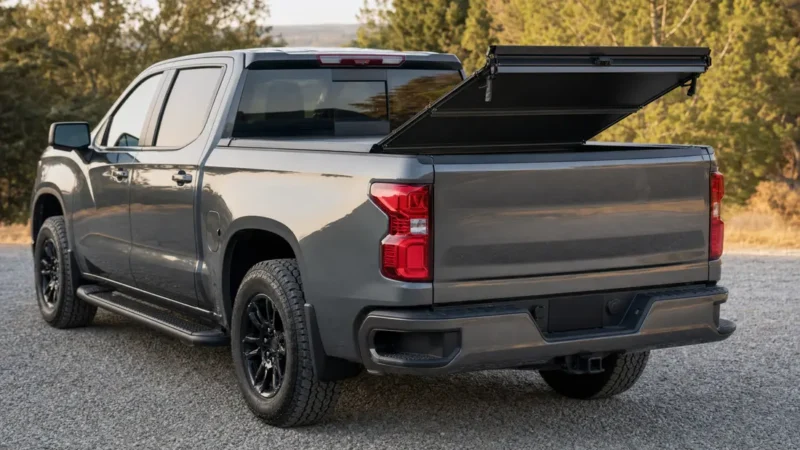
Grey pickup truck with a closed hard tonneau cover in heavy rain, water sheeting off the bed cover

No tonneau cover is waterproof. Not one. The honest question is how much water gets past the cover, where it goes once it does, and whether your cargo cares. A sealed retractable keeps a bed dry enough to haul cardboard through a thunderstorm. A vinyl roll-up will let a cupful in over the same drive and drain it back out through the bed. Both are doing their job. They are just different jobs.

Buyer’s Guide · 19 min read · Editorial team · TruckBedCoverFinder · Bought, not gifted · No paid placements

We hose-tested covers on real trucks, drove them through Midwest spring storms, and left them parked under snow that thawed and refroze for a week. What follows is where the water actually comes in, which covers held up, and the twenty-dollar fixes that stop most leaks on the cover you already own.

The 30-Second Answer: TL;DR

The most waterproof truck bed cover you can buy is a retractable or a one-piece hinged lid — sealed perimeter, no panel seams over the cargo, and factory drain tubes that carry water out through the bed corners. Hard folding covers land close behind. Soft roll-ups will always let some water past the seams and rails; they are weather-resistant, not sealed, and the marketing that says otherwise is lying to you.

Cover Why it stays dry
Retrax PRO XR Sealed retractable, no seams over cargo, four drain tubes See the spec
UnderCover Elite LX One-piece hinged lid — the fewest joints of any cover type See the spec
BAKFlip MX4 Best sealed hard folding: bulb seals at every hinge line See the spec
BAK Revolver X4s Hard roll-up that seals like a folder and still rolls back See the spec
TruXedo Sentry CT The driest thing you can put on a bed for mid-tier money See the spec

The honest part: if you are shopping for a waterproof cover because one specific thing keeps getting wet — a toolbox, a dog crate, a mattress on moving day — a $40 tailgate seal kit and a $25 bulkhead seal on your existing cover will fix more leakage per dollar than any new cover on this page. Read the DIY sealing section before you spend $900.

Bought, not gifted. No paid placements. At no extra cost to you.

“Waterproof” vs. “Water-Resistant”: What the Box Is Not Telling You

There is no industry standard for a waterproof tonneau cover. No IP rating, no pass/fail test, no independent body checking the claim. A manufacturer can print “100% waterproof” on the carton because the panel material does not absorb water — which is true of a garbage bag too, and says nothing about the twelve feet of seam and seal around it.

Here is the distinction that actually matters when you are loading a bed:

  • Water-resistant — keeps the bulk of a rainfall off your cargo. Some water tracks in at the rails and seams. Anything in a sealed tote or a plastic bin is fine. Cardboard, drywall, luggage and mattresses are not.
  • Sealed — a continuous compressed seal around the entire opening plus drain tubes at the corners. Under normal rain, cargo stays dry. Under a pressure washer or a foot of thawing snow, water can still find a path.

Nobody in this industry sells the second word honestly, so read the seal, not the sticker. Two questions answer almost everything: is there a continuous bulb seal around the full perimeter, and are there drain tubes routed out through the bed? If the answer to both is yes, the cover is as dry as tonneau covers get.

The Five Places Water Actually Gets In

Every leak we have chased on a tonneau cover came from one of five places. Knowing which one you have turns a mystery into a twenty-minute fix.

1. The rail-to-bedrail gap

The cover clamps to a rail; the rail sits on your bed rail on a foam or rubber strip. Any dirt, wax residue or leftover bed-liner lip under that strip lifts it, and water walks straight under. This is the single most common leak on a new install and it is almost always an installation error, not a product defect. If your bed rail has a plastic rail cap, the seal has to sit on a clean, flat run of it — not bridging a moulded ridge.

2. The panel seams (folding and roll-up covers)

Every hinge line on a folding cover and every slat joint on a roll-up is a place where two surfaces meet over your cargo. Good covers put a hollow bulb seal in that joint that compresses when the cover latches. Cheap covers use a flat foam strip that takes a set after one summer and stops sealing. On soft roll-ups there is often nothing at all — the vinyl simply lies over the crossbars.

3. The tailgate seal

Water blowing off the cover at highway speed sheets down the back and gets pulled into the gap between the cover and the closed tailgate. It is the leak people misdiagnose most often, because the puddle shows up at the tailgate end of the bed and everyone blames the cover. Most tonneau covers ship with a short tailgate seal; almost none of them ship with one long enough to run the full width and up both corners.

4. The bulkhead — the gap at the cab

The front edge of the bed, where the cover meets the panel behind the cab, is a rough, ribbed casting on most trucks. A straight seal cannot follow it. Water that hits the back of the cab runs down and pools right there. On Ram trucks with a RamBox and on any bed with a stake-pocket cutout, this gap is worse.

5. Drain tubes — blocked, kinked or pointed at your carpet

Retractable and hinged covers collect water in a channel and route it out through flexible tubes that exit at the bed corners, usually through the stake pockets. Three things go wrong. The tubes get plugged with pine needles and road grit. The tubes get pinched flat under a drop-in bed liner. Or during install nobody pushed them through the stake pocket at all, so the channel drains cheerfully into the bed. That third one is common enough that it should be the first thing you check on a used truck.

Diagnose it in ten minutes: park on level ground, close the cover and the tailgate, then run a garden hose — no nozzle, low flow — for two minutes on one zone at a time. Front third, then middle, then the tailgate seam, then the rails. Have someone sit in the bed with a flashlight. Water only lies about where it came from once it is already running, so test in zones and stop as soon as you see the first drip.

How We Test Covers for Water

Marketing claims are free, so we do not use them. Every cover in this guide went through the same four stages on the same truck, in the same order. Details of the wider protocol live in how we test.

  1. Zone hose test. Low-flow garden hose, two minutes per zone, five zones. Anything visible at this stage is a seal or install fault, full stop.
  2. Highway rain. A minimum of one hour at 60-plus mph in real rain, bed loaded with plain cardboard boxes. Cardboard is the honest witness — it shows a teaspoon of water that a bed mat would hide.
  3. Standing water. Cover closed, parked nose-down on a slope through an overnight storm so water pools at the tailgate rather than draining forward.
  4. Freeze-thaw. Snow load left to thaw and refreeze across a week. Ice does two things rain cannot: it lifts a seal as it expands, and it blocks a drain tube solid.

We do not pressure-wash covers as a pass/fail test, because no tonneau cover is built for it and failing that proves nothing. It does mean something for how you wash your truck, and that is covered separately.

Which Cover Types Actually Stay Dry

Before the individual picks, the type decision does most of the work. If you want to go deeper on the categories themselves, start with tonneau cover types and use cases.

Type Seams over cargo Drain tubes Real-world dryness
Retractable Slat joints, but sealed and under a canister lip Yes, four Driest category
Hinged (one-piece) None Yes, usually two Driest single panel, no bed access trade-off avoided
Hard folding 2–3 hinge lines, bulb-sealed on good models Yes on premium models Very good; the value sweet spot
Hard roll-up Many slat joints, individually sealed Yes Very good, slightly behind folding
Soft folding / tri-fold Hinge lines with foam or velcro Rare Keeps rain off, expect damp corners
Soft roll-up Crossbar contact points, no seal No Weather-resistant only

The pattern is not subtle: fewer joints over the cargo plus real drain tubes equals a drier bed. Everything else — material, brand, price — is downstream of those two facts. That is also why the retractable versus folding decision tends to settle itself once you know whether you actually haul anything that water ruins.

The trade nobody mentions: the covers that seal best are the covers that are hardest to remove. A retractable canister lives in the front of your bed permanently and eats 8 to 12 inches of length. A one-piece hinged lid is a two-person lift to take off. If you need a fully open bed twice a month, buying maximum dryness will annoy you every time.

Our Picks: The Covers That Held Water Out

Retrax PRO XR: Best Overall Waterproof Truck Bed Cover

Aluminium slats over a sealed track, a canister at the bulkhead, and four drain tubes routed out through the bed corners. Through highway rain with cardboard in the bed, this is the only category that has ever come out with the boxes still square. The PRO XR adds an adjustable rail height, which matters more than it sounds: it lets the cover sit flush with the bed rail so the perimeter seal compresses evenly rather than bridging over a liner lip.

What you pay for is the seal, and what you give up is bed length and a lot of money. The canister is permanent. If you occasionally haul something the full length of the bed, this is the wrong cover regardless of how dry it is. Full spec and fitment notes.

UnderCover Elite LX: Fewest Joints, Driest Panel

A one-piece hinged lid has exactly one seam — the perimeter — and no joints at all over your cargo. Physics does the rest. In the freeze-thaw test it was the only cover that showed nothing at all after a week, because there was no hinge line for expanding ice to lift.

The compromise is access. Open, it stands up on struts like a car boot lid; to carry anything taller than the bed rail you take the whole panel off, and that is a two-person job. Best for a truck that hauls tools and gear inside the bed, never above it. See the spec.

BAKFlip MX4: Best Sealed Hard Folding Cover

The realistic pick for most people. Hollow bulb seals at each hinge line rather than the flat foam strip that budget folders use, plus drain channels that route water out at the corners. It came out of the highway rain test with damp seam lines and dry boxes, which is the correct result for a folding cover.

You get about 90% of the retractable’s dryness, full bed access when you fold it forward, and a lower price. If you are cross-shopping the whole category, our hard folding cover picks go through the rest of the field. See the spec.

BAK Revolver X4s: Best Sealed Roll-Up

A hard roll-up that behaves like a folder on water. Each aluminium slat carries its own seal, and the whole assembly rolls to the cab instead of stacking, so you keep more usable bed height when it is open. In our zone hose test it matched the MX4; in standing water it fell slightly behind, because a roll-up has more linear feet of joint for water to sit on.

Worth it specifically if you want a dry bed and you load from the side over the rail. See the spec.

TruXedo Sentry CT: Best Value for a Dry Bed

The one on this list we would call a bargain. A hard roll-up with a sealed rail system at a price that sits below the folding premium tier, and it gave up almost nothing in the hose and highway stages. It is heavier to roll than the Revolver and the latch takes learning. Neither of those is a leak.

If your budget will not stretch to the top three and you still need cargo to arrive dry, this is the pick. See the spec.

What we would not buy for water

Soft roll-ups. Not because they are bad — the best soft roll-ups are excellent value and we recommend them constantly — but because keeping a bed dry is the one job they are structurally unable to do. Vinyl over crossbars has no sealed joint. If someone has sold you a “100% waterproof” vinyl roll-up, you were sold a sentence, not a seal.

Side-by-Side

Cover Type Seal quality Drain tubes Price band Best for
Retrax PRO XR Retractable Excellent 4 $$$ Maximum dryness, security
UnderCover Elite LX Hinged Excellent 2 $$$ No seams at all, freeze-thaw
BAKFlip MX4 Hard folding Very good Yes $$$ Dry bed plus full access
BAK Revolver X4s Hard roll-up Very good Yes $$ Side loading over the rail
TruXedo Sentry CT Hard roll-up Good Yes $$ Best value dry bed

Prices move constantly and vary by truck and bed length, so we do not print them. Confirm the current figure and — more importantly — the exact fitment for your year, cab and bed before you buy. Our product database lists the full field by cover type, and measuring your bed properly takes five minutes and prevents the single most expensive mistake in this category.

Drain Tubes: The Part Everyone Ignores Until It Rains Indoors

A sealed cover does not stop water. It collects water in a channel around the perimeter and moves it somewhere. If that somewhere is blocked, you have built a shallow bathtub over your cargo, and the first hard rain will overflow it into the bed. A cover with plugged drains leaks worse than a cover with no drains at all.

Where they go

On most trucks the tubes exit through the front stake pockets and drop behind the bed, or run down inside the bed wall and out at the corner. They should hang free, point down, and end below the bed floor. Anything else is wrong.

The three failures, in order of how often we find them

  • Never routed. Installer left the tubes coiled inside the bed rail. The channel drains into the bed by design. Ten-minute fix.
  • Pinched. A drop-in bed liner or a bed mat laid over the tube flattens it. The symptom is a leak that only appears in heavy rain, because light rain still trickles through the squeeze.
  • Plugged. Pine needles, leaf litter, road salt crust. Park under a conifer for one autumn and it will happen.

Clearing them

Do not use compressed air at full pressure — the tubes are soft and the barbed fitting at the channel end pops off, and now the leak is inside your bed rail where you cannot see it. Use a weed-trimmer line pushed gently from the bottom end, then flush from the top with a hose at low flow. Twice a year is enough. Every autumn is smarter if you park under trees.

Cold climate note: a drain tube full of standing water freezes solid at the first hard night, and stays frozen through every thaw for the rest of the week. If you live where winter means something, flush the tubes before the first freeze, not after the leak.

Close-up of the rubber bulb seal where a tonneau cover meets the closed tailgate, beaded with rainwater
A compressed bulb seal at the tailgate line — the cheapest upgrade that stops highway spray getting into the bed.

Making the Cover You Already Own Waterproof

Most people arriving at this page do not need a new cover. They need three parts and an afternoon. In rough order of how much water each one stops:

1. A full-width tailgate seal (biggest win, about $30–45)

The stock seal on most covers is a short strip that covers the middle of the tailgate and nothing at the corners — which is exactly where highway spray gets pulled in. A full-width bulb seal kit that runs the whole tailgate and up both corner posts is the highest-value fix in this entire guide. Clean the surface with isopropyl alcohol first, not a wet rag, or the adhesive lifts by the second wash.

2. A bulkhead seal at the cab end (about $20–30)

A foam or rubber wedge that fills the ribbed gap at the front of the bed. Cheap, ugly, invisible once the cover is closed, and it stops the puddle that forms behind the cab. On trucks with stake-pocket cutouts you may need to trim it to fit around them; a fresh utility blade and a straight edge does it cleanly.

3. Replace tired perimeter seal (about $25–50)

Bulb seals take a compression set after three to five seasons — squeeze one between your fingers and if it does not spring back, it is done sealing. Sold by the foot as universal hollow-bulb weatherstrip. Peel, clean off the old adhesive residue with adhesive remover, and lay the new one in one continuous run with the joint at a top corner, never at the tailgate.

4. Re-seat the rails (free)

If your leak started right after install, loosen the clamps, lift the rail, wipe the bed rail clean of wax and grit, and re-torque the clamps front to back rather than all at once. Over-tightening one clamp bows the rail and lifts the seal two feet away — the classic “I tightened it more and it leaked worse” story.

What not to do: do not run a bead of silicone around the rail to stop a leak. It works for one season, traps water and grit against the bed rail, and when you eventually remove the cover the paint comes with it. Rust from trapped moisture costs far more than the cover ever did.

Install Mistakes That Cause Leaks

  • Installing over a bed-liner lip. A drop-in liner with a rail flange puts a ridge under your seal. Either trim the flange or use a cover designed to clamp over it. This is the number one cause of a brand-new cover leaking on day one.
  • Clamping in the wrong order. Snug everything hand-tight first, check the seal contact along the full run, then torque. Never fully tighten the front clamps before the rear rail is even seated.
  • Wax on the bed rail. Seal adhesive and clamp friction both need a clean surface. Wipe with isopropyl alcohol, let it flash off, then install.
  • Skipping the tailgate seal because it “looked optional”. It was in the box for a reason.
  • Forgetting the drain tubes exist. Covered above. Check them on install day, then twice a year.

Snow, Pressure Washers and Road Salt

Snow load. Sitting snow is not the problem; the thaw is. Meltwater pools on a flat cover and finds any seam that ice has already lifted. If you get real winter, clear the cover with a foam brush rather than letting a foot of snow melt in place, and never with a metal shovel edge.

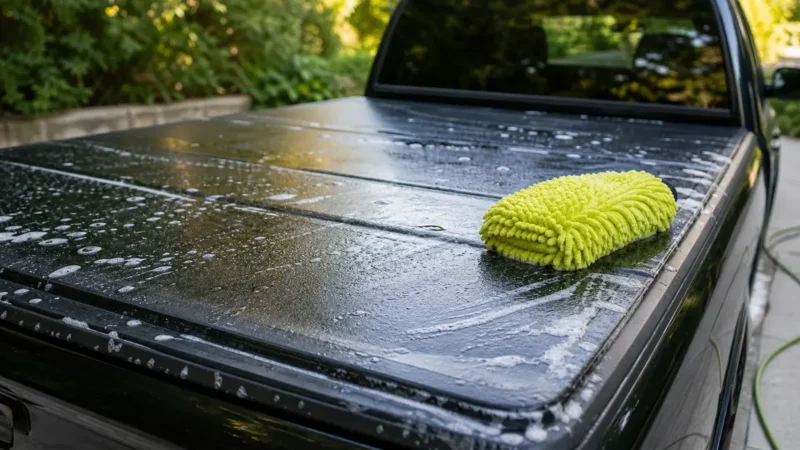
Pressure washers. No tonneau cover is rated for one. A 1,800 psi jet held six inches from a hinge line will push water past a seal that shrugs off a thunderstorm, and it can peel an adhesive-mounted seal outright. Wash from at least three feet back and never aim into a seam. There is more on this in our cover cleaning guide.

Road salt. Salt crust is abrasive and hygroscopic — it holds moisture against the seal and the bed rail underneath. In a salted-road state, rinse the rails and flush the drain tubes at the end of every winter, before the first warm week.

The Questions Buyers Actually Ask

Are tonneau covers waterproof?

No. The best of them are sealed, which means cargo stays dry in normal rain and any water that gets past the seal is routed out through drain tubes. Treat “waterproof” on the box as marketing, and check the perimeter seal and drain tubes instead.

Will a tonneau cover keep my bed completely dry?

Your cargo, yes, with a sealed cover. Your bed, no — some water will always reach the bed floor, which is why every truck bed has drain holes at the corners. A bed that never gets damp is not a design goal for anyone; a bed that never holds standing water is. If yours holds water, check that the factory bed drains are clear before blaming the cover.

Which tonneau cover type is the most waterproof?

Retractable and one-piece hinged, roughly tied. Both have a continuous perimeter seal and factory drain tubes, and neither has a hinge line running across the middle of your cargo. Hard folding is a close and much cheaper third.

Why does my new tonneau cover leak?

Almost always installation, not the product. In order of likelihood: rails seated on a dirty or ridged surface, drain tubes never routed out of the bed, tailgate seal not fitted, clamps over-torqued and bowing the rail. Run the zone hose test above and you will find it in ten minutes.

Can I make a soft roll-up waterproof?

You can make it noticeably drier — a full-width tailgate seal plus a bulkhead seal removes the two largest paths — but you cannot seal the crossbar joints, so it will never be a sealed cover. If your cargo genuinely cannot get wet, put the money toward a hard cover instead of chasing seals on vinyl. Our hard vs. soft comparison lays out that trade honestly.

Do drain tubes need maintenance?

Twice a year, or every autumn if you park under trees. Flush from the top with low-flow water, clear from the bottom with trimmer line. Never full-pressure compressed air.

Does a waterproof cover help fuel economy?

Marginally, and not because of the seal — a flat closed cover reduces bed turbulence a little. The real-world number is far smaller than the ads suggest; we ran through it in whether tonneau covers are worth it.

The Bottom Line

Buy on the seal and the drains, not on the word waterproof. If cargo dryness is the priority and budget is not, a retractable like the Retrax PRO XR or a one-piece hinged lid is as dry as this category gets. If you want most of that for a lot less, the BAKFlip MX4 is the sensible answer and keeps your bed access. If you already own a cover and it leaks, spend $60 on a tailgate seal and a bulkhead seal and check your drain tubes before you spend anything else — that fixes the majority of leaks we get asked about.

Next steps: narrow the field by your truck in our covers by truck model pages, compare the sealed models side by side in the best-by-type rankings, or read up on the brands before you commit.

Keep reading

Related stories

Find my cover