
Skip to content
TruckBedCoverFinder

Buyer's Guide 15 min read

Best Retractable Tonneau Covers: Tested, Ranked and Priced

Retractable covers lock anywhere and seal best, but cost you six inches of bed forever. The four worth buying, and who should buy a folding cover instead.

admin-truck

Editorial team · TruckBedCoverFinder
Published

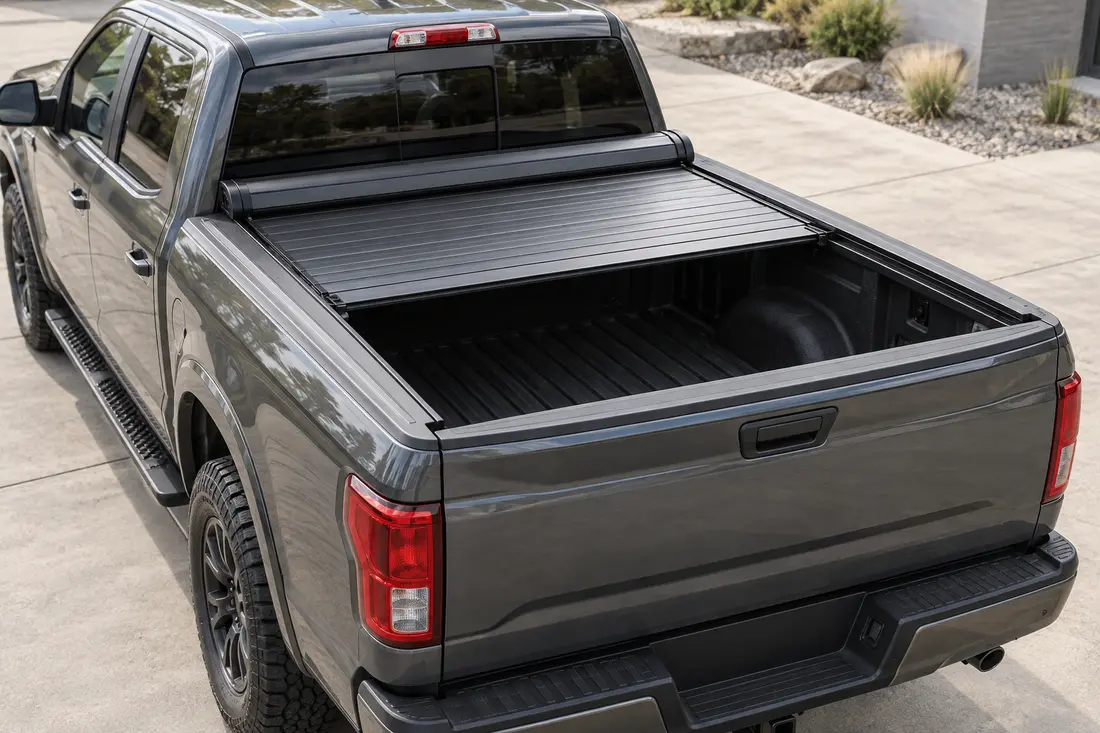
Retractable aluminium slat tonneau cover half open on a full-size pickup bed

A retractable tonneau cover is the only type that locks your bed at any point along its length, seals like a hard lid, and disappears into a canister when you want the whole box open. It is also the only type that charges you six inches of bed for the privilege, permanently, whether the cover is open or closed. Everything worth knowing about buying one lives in the tension between those two sentences.

Buyer’s Guide · 17 min read · Editorial team · TruckBedCoverFinder · Bought, not gifted · No paid placements
We have run retractables through the same four-stage water test as every other cover type, left them through a freeze-thaw week, and loaded crossbars onto the ones rated to take them. Here is which ones earn the money, and who should buy a hard folding cover instead.

The 30-Second Answer

The Retrax PRO XR is the best retractable tonneau cover you can buy, and the reason is not the sealing or the lock — both are matched elsewhere — but the reinforced top rated to carry crossbars. It is the only cover in this class that turns the bed into a roof rack as well as a locker. If you do not need that, the RetraxONE MX does everything else for less weight, and Roll-N-Lock’s M-Series is the sensible way into the type.

Cover Best for Weight (5.5 ft) Warranty
Retrax PRO XR Carrying crossbars and gear over the bed ~75 lb Limited lifetime See the spec
RetraxONE MX The all-round premium retractable ~62 lb Limited lifetime See the spec
Roll-N-Lock M-Series Lowest weight and the flushest look ~55 lb 3-year See the spec
Roll-N-Lock A-Series Aluminium slats at Roll-N-Lock pricing ~60 lb 3-year See the spec

The honest warning: if your bed is 5.5 ft or shorter and you regularly carry bulky cargo, a retractable is the wrong purchase. The canister does not go away when the cover is open. Read the canister tax before you spend the money, and if it changes your mind, our hard folding guide is where you should be.

How a Retractable Actually Works

A retractable cover is a series of interlocking slats — aluminium, or aluminium with a polycarbonate or vinyl laminate — riding in two side rails. Pull the handle and the slats travel forward along the rails and coil into a sealed canister mounted against the bulkhead, the way a roll-top desk closes. Push it back and a latch engages wherever you stop.

Three things follow from that design, and they are the whole case for the type:

  • It locks anywhere. Not just closed. Half open, a third open, wherever your load stops — the cover locks at that point. No other cover type does this. A folding cover is locked or it is folded.
  • There are no seams over your cargo. The slats interlock along their length, the perimeter seals against the rails, and water that gets in runs to drain tubes at the bed corners rather than onto what you are carrying. This is why retractables and one-piece hinged lids top our waterproof cover testing.
  • Nothing has to go anywhere when you open it. A folding cover, opened, is a stack of panels sitting in your bed. A retractable, opened, is inside the canister and out of your way.

The cost of all three is the canister itself, which lives at the bulkhead permanently and is the single most important fact about owning one.

The Canister Tax

The coiled slats have to go somewhere, and that somewhere is a housing roughly six inches deep across the front of your bed. It is there when the cover is closed, when it is open, and when you have taken the tonneau off in your head but not in reality — because you cannot take a retractable off in ten seconds the way you can unclip a folding cover.

Bed Length Usable after the canister Share of the bed lost
Compact (Maverick) 54.4 in ≈48 in 11%
Short bed 5.5 ft / 66 in ≈60 in 9%
Standard bed 6.5 ft / 78 in ≈72 in 8%
Long bed 8 ft / 96 in ≈90 in 6%

On an 8 ft bed this is noise. On a 5.5 ft bed it is the difference between a dirt bike fitting with the tailgate up and not. Measure the longest thing you routinely carry, then measure your bed minus six inches, before you decide. The bed size finder gives you the exact length for your model and year, and the cargo fit checker answers the common loads directly.

The Picks in Detail

Retrax PRO XR — the one that carries a rack

Aluminium slats, a canister sealed against the weather, limited lifetime warranty, clamp-on installation with no drilling, and about 75 lb in a 5.5 ft application. What separates it from everything else in the class is a reinforced top rated to carry crossbars and gear — so a kayak, a roof box or a pair of bikes can ride over a closed, locked bed.

That single capability is why it is our pick. Every other cover here asks you to choose between covering the bed and carrying over it. If you have ever strapped a kayak to a folding cover and hoped, this is the cover that stops you doing that. The price is the highest in the class and the weight is the highest too — both are the direct cost of the reinforcement.

Buy it if: you carry long or bulky gear over the bed, or you want the most capable cover regardless of price.
Skip it if: nothing ever goes on top. You are paying for structure you will not use.

RetraxONE MX — the sensible premium choice

Aluminium and polycarbonate slats in a matte finish, the same sealing and stop-anywhere locking, limited lifetime warranty, about 62 lb. It is thirteen pounds lighter than the PRO XR and looks better than any cover in this guide on a dark truck — matte black that does not gloss up in the sun.

It is the retractable we would put on our own truck if we were not carrying crossbars. You lose the load rating on the top, which matters to a minority of owners, and you keep everything else that makes the type worth buying.

Buy it if: you want the best sealing and security available and you will never load the cover itself.
Skip it if: the budget is tight — the Roll-N-Lock below does 90% of this for meaningfully less.

Roll-N-Lock M-Series — the flush, light one

Vinyl-laminated aluminium slats, about 55 lb, a 3-year warranty, and the lowest, flattest profile here. Roll-N-Lock’s design sits closer to the rail line than the Retrax covers, which is a real aesthetic win and a small aerodynamic one.

The trade shows up in the weather column. The laminate seals well but not quite to the standard of a bare aluminium retractable with a fully sealed canister, and in our testing the M-Series is the one of the four that benefits most from a tailgate seal kit. It is also the lightest, which on a truck already carrying a box and a rack is not a small thing.

Buy it if: you want retractable security and the flushest look, and you are willing to trade the last few per cent of sealing for it.
Skip it if: the truck lives outside in a wet climate and the bed carries cardboard.

Roll-N-Lock A-Series — aluminium without the Retrax premium

Bare aluminium slats, about 60 lb, 3-year warranty, sealed properly. This is the middle of the market done well: you get the full weather performance of an aluminium retractable, the stop-anywhere locking, and a price below the Retrax pair. The warranty is the giveaway — three years rather than limited lifetime — and that is the fair reflection of where it sits.

Buy it if: you want a sealed aluminium retractable and the lifetime warranty is not what you are buying.
Skip it if: you are keeping the truck ten years. The warranty difference starts to mean something.

Retractable vs the Alternatives

Retractable Hard folding Hinged lid Hard roll-up
Security Highest High Highest Medium–high
Sealing Excellent Very good Excellent Very good
Locks part-open Yes No No No
Bed length cost ~6 in, always None when removed None when removed ~4–6 in when rolled
Tall cargo Cover retracts fully Fold or remove Impossible without removing the lid Rolls back fully
Weight 55–75 lb ~50 lb ~55 lb ~60 lb
Price $$$ $$–$$$ $$–$$$ $$

The comparison people actually agonise over is retractable versus hard folding, and we gave it a piece of its own: retractable vs folding, and which one you will regret. The short version is that a folding cover is better value and better on short beds, and a retractable is better if the bed is genuinely a locker you open and close daily.

The other near-neighbour is the one-piece hinged lid like the UnderCover Elite LX, which matches a retractable on security and sealing, looks more integrated because it can be paint-matched, and gives up all tall-cargo capability in exchange. And if what appeals to you is roll-back access rather than the locking, a hard roll-up like the BAK Revolver X4s gets you most of the way for less money.

What “Most Secure” Actually Means

A retractable is the hardest cover type to defeat quietly. The slats are metal, they interlock, there is no fabric to cut, and the latch engages into the rail rather than clamping onto it. Against an opportunist with a knife — the realistic threat to a bed — it is as good as it gets short of a steel lid.

Two caveats keep it honest. First, no tonneau cover is a safe: given time and tools, any bed opens. What a retractable buys you is time and noise, and those are what deter theft in a car park. Second, and more important, the cover locks to the tailgate. If the tailgate does not lock, dropping it takes your security with it.

Test it yourself: lock the truck, try the tailgate. If it opens, fit a lock. A BOLT tailgate lock codes to your existing ignition key, a powered Pop & Lock ties into central locking, and either turns a $1,200 cover into an actual locked box rather than an expensive lid.

Weather, Drains and Winter

Retractables seal better than anything except a one-piece lid, and the reason is drain tubes: water that reaches the perimeter is routed down the rails and out through the bed corners. That system is also the one maintenance item you cannot ignore.

  • Keep the drain tubes clear. Pine needles and leaf debris block them, and a blocked drain turns the sealed bed into a tray. Check them twice a year — it takes a minute.
  • Clean the rails, not just the cover. Grit in the rails is what makes a smooth retractable start binding. Wipe them and treat with a silicone spray; never use a petroleum lubricant on rail seals.
  • Do not force it when it is iced. A frozen retractable will move if you pull hard enough, and what moves is the slat laminate off the slat. Warm the truck, give it two minutes, then open it.
  • Snow load is fine, standing water less so. These covers carry snow without complaint, but a pooling bed cover is telling you a drain is blocked.

Full sealing methodology, including the twenty-dollar fixes that solve most leaks on any cover, is in the waterproof cover guide. Cleaning without wrecking the finish is in how to clean a tonneau cover.

Weight, Payload and the Part Nobody Mentions

These are the heaviest covers on the market: 55 lb at the light end, 75 lb at the top. That weight comes off your payload rating and stays there. On a half-ton with 1,700 lb of payload it is around 4%; on a mid-size truck closer to 5%; on a compact pickup it starts to matter.

It also sits high and forward, over the bulkhead, which is the best place for weight to sit if it has to sit anywhere. Run your own numbers — cover, passengers, accessories, cargo — through the payload calculator, and if you tow, check what it does to your tongue weight in the tongue weight calculator.

The two-person question is worth asking before delivery day, too. A 75 lb cover arrives in one box, and the canister assembly is awkward rather than heavy. Every cover here is clamp-on with no drilling, and every one is easier with a second pair of hands.

How We Tested These

Retractables are judged on four things, and three of them only show up after a few months of ownership.

  • Water, in four stages. A hose along the rails, a hose across the closed cover, a pressure wash at the tailgate seam, and then a real storm with cardboard boxes in the bed. The cardboard is the test that matters — it does not care about specifications.
  • Freeze and thaw. A week parked outside through a cycle of snow, melt and refreeze, then opened cold. This is where laminated slats separate from bare aluminium, and where a cover that was smooth in September starts binding.
  • Grit in the rails. We run these covers dirty on purpose. A retractable that only works clean is a retractable that will annoy you by spring.
  • The daily handle test. One hand, arms full, tailgate down. A cover that needs two hands and a technique gets used less, and a cover that gets used less is not doing its job.

We buy the covers. None of them are supplied by manufacturers, nothing on this page is a paid placement, and where a cover is worse than a cheaper alternative we say so — see the testing methodology and the editorial policy if you want the long version.

Installation and the First Week

All four covers here clamp on, need no drilling, and take about an hour the first time. The canister is what makes it different from fitting a folding cover, and there are four things worth knowing before you start.

  1. Clear the bulkhead first. The canister mounts hard against the front of the bed. Bed liners with a raised front lip, cab-height headache racks and anything bolted across the front of the bed all need checking before the box is opened.
  2. Set the rails, then square the canister. A canister that is even slightly out of square makes the slats track unevenly, which you feel immediately in the handle.
  3. Route the drain tubes down the bed corners. They should hang free and exit below the bed. Tubes kinked behind a liner are the leading cause of “my sealed cover leaks”.
  4. Re-check the clamps after a week. Everything settles. Five minutes with the supplied tool, once, and the cover stops rattling for good.

If you have not fitted a cover before, the general sequence — and the mistakes that cost people their deposit — are in our measuring and fitting guide. Measure the bed with the tailgate closed and latched; every cover here is ordered by bed length, and every retractable on the market is unforgiving about it.

Who Should Not Buy a Retractable

  1. Owners of short beds who haul. Six inches off a 5.5 ft bed, permanently, is a real constraint. Buy a folding cover and keep the length.
  2. Anyone running a crossover tool box. The canister wants exactly the space the box occupies. Our toolbox and cover guide explains which types can share a bed — retractables are not among them, unless the box sits on the bed floor.
  3. People who remove the cover seasonally. A folding cover comes off in minutes. A retractable is a proper removal job.
  4. Budget buyers. A retractable is the most expensive type by a wide margin. If security is the goal and money is tight, a hard folding cover plus a tailgate lock gets you most of the protection for a lot less.

Retractable Tonneau Covers — FAQ

Are retractable tonneau covers worth it?

If the bed is a locker you open and close daily, yes — the stop-anywhere locking and the sealing are genuinely better than any other type. If you open the bed twice a month and mostly want to keep rain off, a hard folding cover does that for less money and costs you no bed length.

How much bed space does a retractable cover take?

Roughly six inches at the bulkhead, for the canister, and it is permanent — open or closed. On a 5.5 ft bed that is about 9% of your length; on an 8 ft bed it is about 6%.

Are retractable covers waterproof?

They are the most sealed cover type along with one-piece hinged lids: interlocking slats, a sealed perimeter and drain tubes at the bed corners. No tonneau cover is waterproof in an absolute sense, but a retractable with clear drains will keep cardboard dry through a storm.

Can you put a rack on a retractable tonneau cover?

Only on a cover built for it. The Retrax PRO XR has a reinforced top rated to carry crossbars; the others in this guide are not load-rated. More options in our rack-compatible cover guide.

Do retractable tonneau covers require drilling?

No. Every cover in this guide is clamp-on. That also means none of them affects your factory warranty, and all of them come off if you sell the truck.

Manual or electric?

Manual, for almost everyone. Powered retractables exist and they are genuinely pleasant, but you are adding a motor, wiring and a failure mode to a part of the truck that lives in weather, and a manual retractable already opens with one hand.

How long do they last?

The aluminium covers here carry limited lifetime or three-year warranties, and the failure points are the rails and the laminate rather than the slats. Keep the rails clean and the drains clear and a retractable outlives most folding covers — which is part of the value argument for the price.

Before You Buy

Confirm the cover is made for your exact truck, year and bed in the fitment checker, compare any two of these covers head to head in the cover comparison tool, and if you are not yet sure the type is right for you, the cover type quiz will tell you in six questions — including when the answer is that you should buy something cheaper.

Keep reading

Related stories

Find my cover