Free tool
MPG calculator
Find your real gas mileage from a fill-up, your cost per mile and the L/100km equivalent — then project your trip and annual fuel cost, and see what a tonneau cover could save.
Your gas mileage
17.8 MPG
Average for a full-size truck
What it costs you to drive
At 17.8 MPG and $3.50/gal, here's your fuel bill.
What a tonneau cover could save
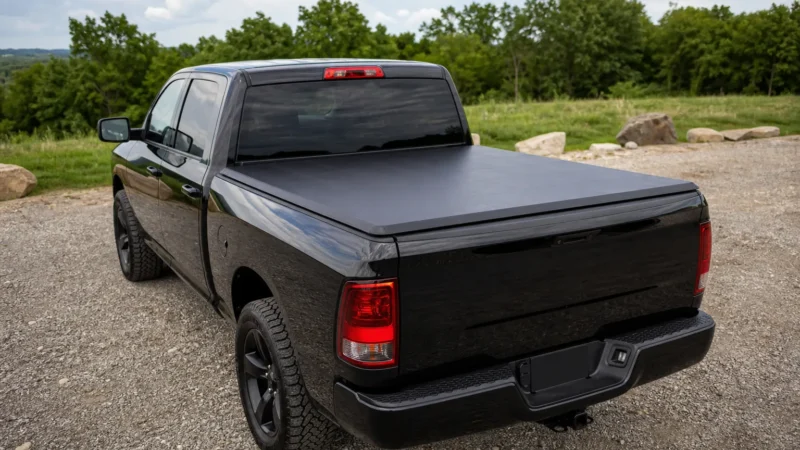
A closed bed cuts the drag behind your cab. Independent tests usually show a small highway gain — set a realistic figure and see what it's worth over a year.
Real-world gains vary by truck, cover type and how much highway you drive — treat this as a ballpark, not a guarantee. The savings add up next to a cover's other benefits: security, weather protection and a cleaner look.
What hurts your truck's MPG
The biggest levers on a pickup's fuel economy — and the one mod that helps.
Bigger tires
Taller, heavier all-terrains and mud-terrains add rolling resistance and rotating mass — often 1–3 MPG.
Lifts & lowering
A lift raises the truck into more air; aggressive tires and re-gearing compound the hit. Drag rises fast with height.
Towing & payload
Pulling a trailer or hauling a heavy load is the single biggest MPG killer — economy can fall by a third or more.
Roof & bed racks
Roof racks, light bars and tall bed racks add aerodynamic drag that grows sharply at highway speed.
Speed
Drag rises with the square of speed. Cruising at 75 instead of 65 can cost several MPG on its own.
Tire pressure
Under-inflated tires flex and drag. A few PSI low across four tires quietly costs a MPG or more.
Weight & junk in the bed
Every 100 lb of dead weight nudges economy down — clear the bed of tools and gear you do not need.
A tonneau cover
The exception that helps: a closed bed reduces the turbulence behind the cab, trimming highway drag a little.
Gas mileage — frequently asked
How do I calculate my MPG?
Fill the tank, reset the trip meter, drive normally, then fill up again and note the gallons it took. Divide the miles driven by the gallons added: miles ÷ gallons = MPG. For the most accurate number, fill to the same click-off point both times and average a few tanks. This calculator does the math and also gives your cost per mile and the L/100km equivalent.
What is a good MPG for a truck?
For a modern full-size gas pickup, mid-to-high teens around town and low-to-mid 20s on the highway is typical. Diesels and hybrids do better, often mid-20s and up. Mid-size trucks usually beat full-size by a few MPG. Towing, big tires, a lift and high speeds all pull these numbers down.
How do I convert MPG to L/100km?
Divide 235.21 by the US MPG figure. For example, 20 MPG is 235.21 ÷ 20 ≈ 11.8 L/100km. To go the other way, divide 235.21 by the L/100km value. This calculator shows both automatically, plus km/L.
Does a tonneau cover really improve gas mileage?
A little, mostly on the highway. A closed tonneau cover reduces the low-pressure turbulence that forms in an open bed behind the cab, which trims aerodynamic drag. Independent tests usually show a small gain — often around 1–2% — rather than the larger figures sometimes advertised, and the effect is smallest in town. Use the cover-savings estimate above with a realistic percentage to see what that is worth over a year of your driving.
Is calculating MPG by hand more accurate than the dashboard readout?
Often yes. The trip computer estimates fuel use and can read a few percent optimistic. Hand-calculating from actual gallons pumped over known miles is the ground truth — and averaging several tanks smooths out fill-level differences.