Skip to content
TruckBedCoverFinder

Uncategorized 31 min read

Tonneau Cover Types Matched to How You Actually Use Your Tru

Not all tonneau cover types suit every driver. Match your real use case—daily hauling, jobsite, camping, overlanding—to the right truck bed cover before you buy

admin-truck

Editorial team · TruckBedCoverFinder
Published · Updated

Truck bed tonneau cover types

Most tonneau cover comparison guides list the same six truck bed cover types, assign each a 4.2-star rating, and leave you exactly where you started. The real question isn’t which cover is “best” – it’s which cover fits the three variables that actually govern your week: how you load your bed, how often you need full unrestricted access, and how much weather or theft pressure your gear faces. Get those three right and the right tonneau cover type picks itself.

Quick-Pick: Match Your Truck Use to a Cover Type in 60 Seconds

Find your use case in the left column. That row is your answer – read the rest of the article only if you want to know why.

Your primary use case Recommended cover type One-line reason
Daily commuter, cargo changes weekly Soft roll-up (e.g., Tyger T1) Opens in under 10 seconds, rolls out of the way completely, on the affordable side
Jobsite / contractor, tools daily Hard folding (e.g., BAKFlip MX4) Aluminum panels resist pry attempts; folds to 75% bed access without full removal
Weekend camper, gear stays in bed Hard folding or retractable (e.g., RetraxPRO MX) Locks flat, keeps gear dry, leaves tailgate functional for camp setup
Overlander with roof rack or RTT Low-profile hard folding or no cover Most retractables and roll-ups can’t support the 400+ lb dynamic load of a rooftop tent
High-theft urban parking Retractable aluminum (e.g., RetraxONE MX) Locks into side rails; no exposed fabric a box-cutter can breach
Snow belt / heavy weather Hard folding with sealed hinges (e.g., BAKFlip G2) Solid panels shed snow load; soft covers sag and leak once temps drop below freezing
Towing / fifth-wheel setup Soft roll-up or remove entirely Fifth-wheel and gooseneck hitches physically conflict with most hard covers’ rail systems

Two things the table won’t settle for you: budget and cab-to-tailgate fit. A retractable aluminum cover runs varies installed – roughly 4x the cost of a soft roll-up. And fit matters more than most buyers expect: a 5’8″ bed on a Ford F-150 takes different hardware than the 6’5″ bed on the same truck. Get your exact bed length before ordering anything.

The 7 Tonneau Cover Types in 2026 (and What’s Changed)

The 7 Tonneau Cover Types in 2026 (and What's Changed)
The 7 Tonneau Cover Types in 2026 (and What’s Changed)

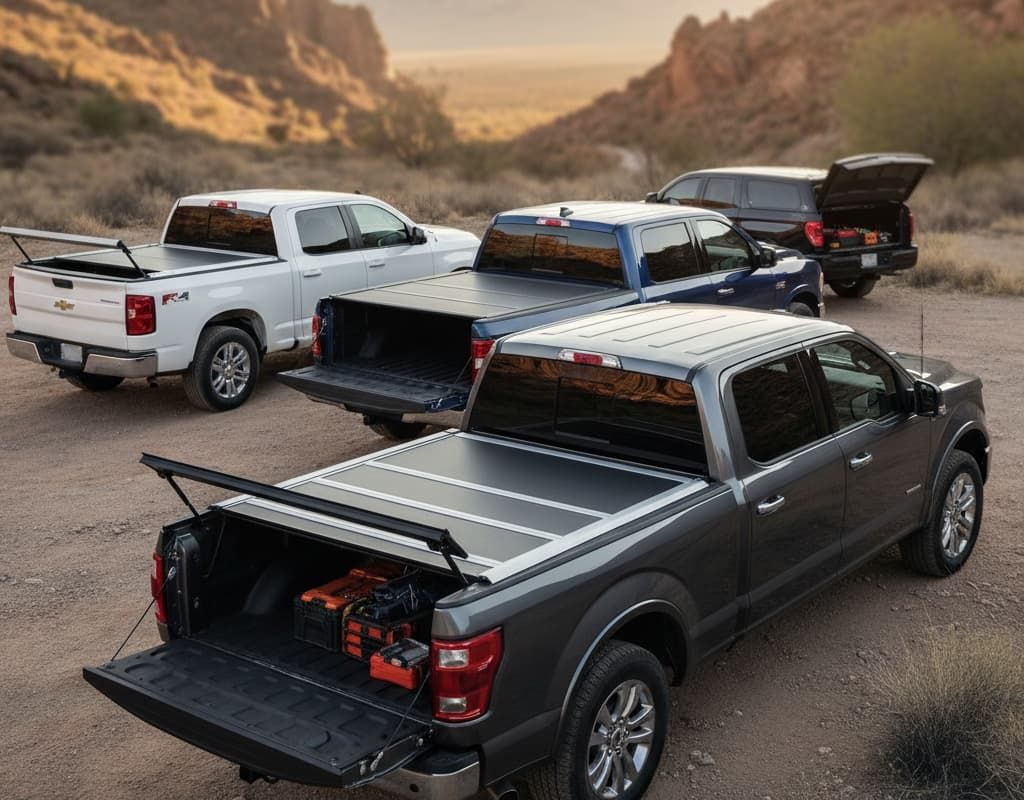
Seven distinct truck bed cover types exist today, and each one was built around a specific trade-off between security, convenience, and bed access. Pick the wrong category and no amount of brand research fixes the mismatch.

Here is what each type actually is – and who reaches for it:

  • Soft roll-up – A vinyl or fabric panel that rolls toward the cab. Low price (typically varies), fast full-bed access, but minimal security. Favored by weekend haulers who load and unload constantly.
  • Hard roll-up – Aluminum slats that roll up similarly. varies. Better weather resistance than vinyl, though not much stronger against pry attacks.
  • Soft tri-fold – Three fabric panels that fold forward. The most popular entry-level type. Brands like Tyger Auto and TruXedo keep prices varies. Partial bed access without removing the entire cover.
  • Hard tri-fold / quad-fold – Aluminum or composite panels that fold in thirds or quarters. This is the fastest-growing segment as of 2026, with BAKFlip and Extang Solid Fold 2.0 leading volume. Prices run varies.
  • Retractable (manual and electric) – A canister behind the cab houses aluminum slats that slide open. Manual versions like the RetraxONE MX cost varies. Electric and solar-actuated models – the Pace Edwards BedLocker Electric and RetraxPRO XR – sit on the premium side and have moved into mainstream retail channels, though availability varies by truck model and dealer region.
  • Hinged one-piece – A solid fiberglass or composite lid hinged at the cab end. Near-trunk-level security. Bed access is limited to the open position only, which rules it out for tall cargo. The UnderCover ArmorFlex is a common example.
  • Toolbox-compatible hybrids – Designed to clear a standard crossbed toolbox. This category blurs older tonneau taxonomies: some are modified roll-ups, others are soft-fold variants with a raised front section. Truxedo makes a dedicated Truxedo Lo Pro for this use case.

What has genuinely changed since 2023

Two shifts are worth noting. First, matte-finish hard-folding covers with integrated flush side rails – seen on updated BAKFlip G2 and Extang Trifecta ALX variants – reduce the visible hardware gap at the rail edge, which older designs left exposed. Whether that translates to measurably better water intrusion protection depends on the specific rail seal, not the finish alone. Second, electric retractables are no longer custom-order oddities. They are stocked at major retailers, though installation still typically requires a 12V tap to the truck’s fuse box.

Type Typical price range Security level Best for
Soft roll-up varies Low Daily haulers, budget buyers
Hard roll-up varies Low-medium Weather protection priority
Soft tri-fold varies Low Part-time truck owners
Hard tri-fold / quad-fold varies Medium-high Most truck owners; daily use
Retractable (manual) varies High Security + quick access
Retractable (electric) the going rate High Hands-free convenience priority
Hinged one-piece varies Very high Valuables storage, minimal cargo changes
Toolbox hybrid varies Low-medium Tradespeople with existing toolboxes

The hybrid category is the least stable of the seven. As manufacturers add mounting rail systems that accommodate both toolboxes and bed extenders, the line between “tonneau cover” and “bed management system” keeps moving. That matters mostly for buyers who already own accessories – check compatibility before buying any cover in this category.

Soft vs. Hard Tonneau Covers: The Real Trade-Off Matrix

Hard covers don’t automatically win on security or fuel economy – the quality of the perimeter seal matters more than whether the panel flexes. A vinyl roll-up with a tight bulb-seal edge will outperform a cheap hard tri-fold with poorly fitted hinge gaps every time, both for weather and aerodynamics.

The table below scores five common cover types across six practical axes. Security ratings use a 1-5 scale where 5 = dedicated lock mechanism with pry resistance; install difficulty uses the same scale where 1 = no drill, clamp-on in under 30 minutes.

Cover Type Security (1-5) Weather Seal MPG Impact Price Range Install Difficulty (1-5) Service Life / Warranty Benchmark
Soft Roll-Up
(e.g., Tyger Auto T1)
2 Moderate – bulb seal helps, seams leak in heavy rain 2-4% estimated gain vs. open bed varies 1 3-5 years / typically 1-year warranty
Soft Tri-Fold
(e.g., Extang Trifecta 2.0)
2 Good – more panel contact points 2-4% estimated gain vs. open bed varies 2 4-6 years / typically 3-year warranty
Hard Tri-Fold
(e.g., BAKFlip MX4)
4 Very good – aluminum panels, foam seal 2-5% estimated gain vs. open bed varies 2 7-10 years / typically 5-year warranty
Retractable
(e.g., RetraxPRO XR)
5 Excellent – canister seal, near-watertight 3-5% estimated gain vs. open bed varies 3 10+ years / lifetime or 5-year warranty
One-Piece Fiberglass
(e.g., Lund Latitude)
5 Excellent – solid shell, paintable to match 3-5% estimated gain vs. open bed varies 4 10-15 years / typically 3-5 year warranty

MPG figures in the table are estimates based on U.S. Department of Energy aerodynamic drag reduction research, which puts typical fuel economy improvement from bed covers in a 1-5% range depending on cover fit, driving speed, and whether the tailgate is raised. Real-world results vary by truck model and driving mix. No cover type consistently hits the top of that range across all conditions.

The soft vs. hard tonneau cover decision comes down to three questions. How often do you need full bed access? Soft covers fold back in seconds; a one-piece fiberglass lid requires removing it entirely. How serious is theft risk in your area? A security rating below 3 means a determined thief with a box cutter can defeat the cover in under two minutes. What’s your budget ceiling? The gap between a the going rate soft tri-fold and a the going rate retractable is real – but so is the difference in service life.

One thing the tonneau cover comparison numbers won’t tell you: a the going rate hard tri-fold with worn hinge seals after three winters will leak more than a fresh the going rate soft cover. Seal condition at year four matters more than panel material at year one.

Roll-Up Covers: Who They’re Actually For

Roll-Up Covers: Who They're Actually For
Roll-Up Covers: Who They’re Actually For

Roll-up covers suit two distinct buyers – and mixing them up leads to a cover you’ll regret within a month.

Soft Roll-Up

The soft roll-up tonneau cover is the right call if you need full bed access several times a week and don’t want to spend on the premium side. Vinyl rolls back in seconds, bunches near the cab, and stays out of the way while you load. Install runs 20 to 30 minutes with no drilling – clamp the rails, snap the tension, done.

The TruXedo TruXport (varies depending on truck size) is the entry-level benchmark most owners reference. It fits flush, handles moderate rain, and weighs under 15 pounds. If you want an improved perimeter seal without jumping to aluminum slats, the Extang Trifecta 2.0 e-Series adds a thicker rubber gasket that noticeably reduces dust intrusion on dirt roads.

The honest trade-off: vinyl can be cut with a knife. Someone determined will get into your bed in under 30 seconds. If you’re hauling tools worth more than the cover itself, a soft roll-up is not the right security layer.

Hard Roll-Up

Aluminum slats change the equation. A hard roll-up tonneau cover rolls to the cab just like the soft version, but the rigid panels hold their shape, seal tighter against the rails, and resist a casual break-in attempt far better than fabric.

Cover type Example model Typical price Security vs. soft roll-up
Soft roll-up TruXedo TruXport varies Low – fabric can be cut
Hard roll-up TruXedo Sentry CT varies Moderate – aluminum slats, no easy cut

The TruXedo Sentry CT sits in that middle ground: it rolls cleanly to the cab, leaves full bed clearance without bulky folding panels sticking up, and locks at the tailgate. You’re not getting the weather seal of a hard folding cover, but you’re getting meaningfully more protection than vinyl at in the typical range more.

Pick a roll-up – soft or hard – when bed access speed matters more than maximum security. If you’re locking up power tools overnight in a city parking lot, a hard folding cover or retractable is the better fit.

Folding Covers (Tri-Fold and Quad-Fold): The Default for Most Owners

Folding Covers (Tri-Fold and Quad-Fold): The Default for Most Owners

Folding covers outsell every other tonneau cover type for one practical reason: partial bed access. Open one panel at the tailgate to grab gear without exposing the entire bed. Open all three and you’re at full capacity. That range of access, at a mid-range price, is hard to argue against.

Soft Tri-Fold

The entry point for folding covers. Vinyl panels over an aluminum frame keep weight low and cost varies for most F-150 or Silverado fitments. The trade-off is seal quality – vinyl panels flex in cold weather, and the hinge gaps let in more water than a rigid panel design. Fine for dry climates or owners who mostly want sun protection and a theft deterrent, not waterproofing.

Hard Tri-Fold

Aluminum panels change the equation. The BAKFlip MX4 and Extang Solid Fold 2.0 are the current retail benchmarks in this segment – both run varies and use dual-action latches that lock each panel independently. That matters for theft resistance in a way soft panels simply don’t provide.

Type Typical Price Range Panel Material Weather Seal Best For
Soft tri-fold varies Vinyl over aluminum Basic Casual use, budget buyers
Hard tri-fold varies Aluminum panels Dual-action latches, foam seal Security + weather, daily drivers
Quad-fold varies Aluminum or fiberglass Varies by brand Short-bed trucks (5.5 ft)

Quad-Fold

Short-bed trucks – the 5.5-foot beds common on crew-cab configurations – lose significant usable space with a tri-fold because the folded stack sits further forward. A fourth panel reduces that stack depth by roughly 25%, keeping more bed open when you need it.

Two fitment details apply to all folding covers. First, low-profile designs sit flush with the bed rail and clear most sport bars without modification; raised designs add 2-3 inches of cargo height clearance underneath, which helps with taller gear but can conflict with bed accessories. Second, folding covers clamp directly to the bed rail – if you have a spray-in liner that built up unevenly along the top edge, the clamps won’t seat flush and the seal leaks. Measure rail thickness before ordering; most covers specify a 1.25-inch to 2-inch clamping range.

Retractable Covers: When the Premium Price Is Justified

Pay varies installed and you get the one cover type that locks flush against the cab with no fabric to cut, no hinge gaps, and no panel to pry. For anyone parking in a high-theft urban area, that security gap alone separates retractables from everything else in this tonneau cover comparison.

The two 2026 benchmarks worth knowing: the RetraxPRO XR (polycarbonate rail system, rated for roof loads up to 500 lbs) and the Pace Edwards BedLocker Electric (aluminum slats, one-touch motor). Both lock at multiple rail points and integrate with OEM bed tie-down systems on current F-150s, Silverados, and Rams without drilling.

Feature RetraxPRO XR (Manual) Pace Edwards BedLocker Electric
Actuation Manual push Electric motor
Price (installed, approx.) varies varies
Lock points Cab-end lock + rail clamps Cab-end lock + motor brake
Rated roof load 500 lbs 400 lbs
Best for Daily commuters, moderate access Fleet, 10+ bed openings/day

Electric actuation adds varies over a comparable manual unit. That premium pays off fast if you’re opening the bed ten or more times a day – a contractor pulling tools on every job site, or a fleet manager who needs one-handed operation. For weekend haulers, manual is fine.

Some retractables now advertise solar-electric charging. Be honest about what that means in practice: a truck parked in Chicago or Seattle from October through March collects marginal solar energy. The battery buffer helps, but it won’t replace a wired connection for heavy daily use in northern latitudes.

The case for spending this much comes down to three things. First, security – there is no fabric panel a box cutter touches. Second, clean cab-flush profile that doesn’t affect aerodynamic drag the way a bulky folding cover can. Third, durability: polycarbonate and aluminum slat systems routinely outlast the trucks they’re mounted on. If your shortlist answer from the quick-pick earlier pointed toward hard covers in a high-security context, this is where the budget goes.

Hinged One-Piece Covers: The Niche Case

Hinged One-Piece Covers: The Niche Case

A hinged one-piece cover does one thing better than every other truck bed cover type: it looks like it came from the factory. Models like the A.R.E. DCU and LEER 100XQ ship in paint-matched finishes and sit flush enough that, from 20 feet away, most people can’t tell the cover from the truck’s bodywork.

The mechanism is simple. A gas strut lifts the entire shell from the tailgate end. No folding panels, no rolling slats – just one solid piece that rises and locks open while you load. Security is genuine: the shell is fiberglass or aluminum, and most models use a rotary latch system with keyed locks on both sides.

The trade-offs are real, though. Price runs varies installed, which puts it in retractable cover territory without the day-to-day convenience. And the compatibility list is short.

  • Fifth-wheel or gooseneck hitch setups – the shell footprint blocks rail access entirely
  • Over-the-rail toolboxes – no room to mount them without cutting the seal
  • Frequent bed users – the full-lift mechanism earns its keep only when you’re not lifting it constantly

The honest filter: if you open your bed more than twice a week, this is the wrong category. Contractors, weekend haulers, anyone who treats the bed as active storage – a folding or retractable cover serves better. The one-piece hinged cover suits the truck owner who wants maximum security, a clean OEM look, and rarely needs to get inside.

Toolbox-Compatible Covers: What Contractors and Overlanders Actually Need

Toolbox-Compatible Covers: What Contractors and Overlanders Actually Need

Most tonneau cover types assume an empty bed rail. Add a crossover toolbox and roughly 80% of covers on the market simply won’t fit without modification.

The clearance problem is mechanical. A standard crossover toolbox sits 10 to 14 inches above the bed rail, which means any cover that mounts flush to the rail – tri-folds, retractables, one-piece hinged panels – hits the box before it closes. You have three real paths forward.

  • Swap to a low-profile toolbox (under 9 inches of rail overhang) and run a standard roll-up or tri-fold behind it. Brands like Weather Guard and JOBOX make low-profile crossover models in the 6-to-8-inch range.
  • Buy a tonneau-toolbox combo unit. The TruXedo TonneauMate mounts directly on top of a TruXedo roll-up cover; Extang and UnderCover both sell toolbox-integrated folding systems designed so the box and cover share the same rail hardware.
  • Use a short-panel folding cover that folds entirely behind the toolbox, leaving the front section of the bed to the box. The BAKFlip CS is built specifically for this – it ships with a toolbox-compatible clamp kit and works with boxes up to 18 inches of bed length.

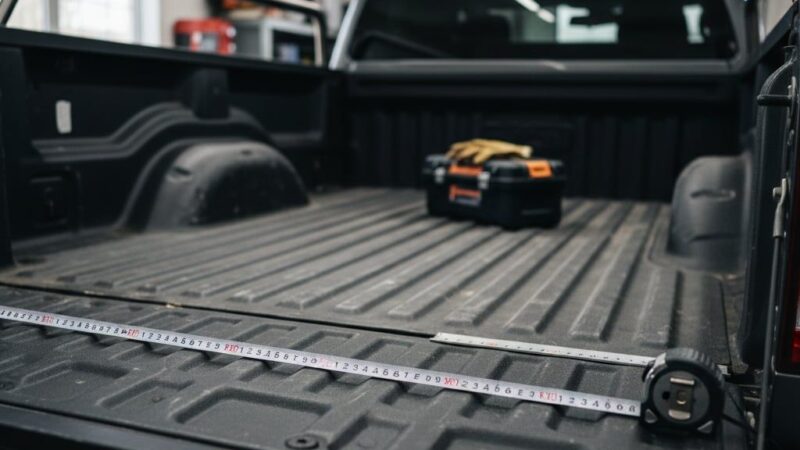
Before you order anything, measure three numbers.

  1. Rail height: distance from the top of your bed rail to the underside of the toolbox lid when closed.
  2. Toolbox overhang: how far the box extends past the rail toward the bed floor – this determines whether a cover can seal at the cab end.
  3. Usable bed length behind the box: measure from the rear face of the toolbox to the inside of the tailgate. Most combo cover systems need at least 48 inches here to fold properly.

Attempting to mount a standard tri-fold over a full-height crossover box will crack the rear panel seal. The panel flexes against the box lip under load and the seal tears within weeks. Measure first.

Overlanders running roof rack systems face a different version of the same problem. Standard 1.75-inch crossbars clear most soft roll-up covers without issue. Hard folding panels – including the BAKFlip MX4 and Extang Solid Fold 2.0 – typically need a 1-inch spacer kit when crossbars sit closer than 6 inches to the bed rail. Check the manufacturer’s crossbar clearance spec before mounting; most list it in the installation PDF, not the product page.

Solution Best for Approx. cost Key limitation
Low-profile box + standard cover Contractors who want any cover type varies combined Requires replacing existing toolbox
TruXedo TonneauMate combo Daily-use contractors, tool security varies Box sits at cab end only; no mid-bed placement
BAKFlip CS short-panel Keeping existing full-height box varies Needs 48+ inches of usable bed behind box
Soft roll-up with crossbar spacer kit Overlanders with roof rack systems varies + the going rate spacer Fabric vulnerable to sharp gear edges

The best tonneau cover for trucks with toolboxes is the one that accounts for what’s already bolted to your bed – not just the cover category. Get those three measurements before you read another spec sheet.

Cover Type by Real-World Truck Use Case

Cover Type by Real-World Truck Use Case

Your cover type should match how you actually use your truck — not how you might use it someday. Below are six owner profiles with specific routines, cargo habits, and a verdict for each.

Owner Profile Truck Bed Access Pattern Cover Type Verdict Specific Model
Daily commuter, suburban F-150 XLT 2-3x/week, Costco runs Hard tri-fold BAKFlip MX4
Contractor, jobsite daily Silverado 2500 Multiple times/day, tall tools Toolbox-compatible roll-up Extang Trifecta Toolbox
Weekend camper Ram 1500 Full bed open on weekends, sleeping platform Low-profile hard tri-fold or retractable RetraxONE MX
Overlander with rack Tundra Crossbars, gear stacked high Retractable or short-panel hard fold with spacers Retrax Pro XR
Fleet/work, urban high-theft F-150 STX Daily, locked overnight on street Retractable or hard one-piece TruXedo Sentry CT
Snow-belt driver GMC Sierra 1500 Year-round, Minnesota winters Hard tri-fold, aluminum frame BAKFlip G2

Why each verdict holds up

The daily commuter on an F-150 XLT opens the bed a few times a week — rarely the full length. A hard tri-fold like the BAKFlip MX4 handles that cleanly: flip one panel at the tailgate for a 12-pack of paper towels, fold all three back for a larger haul. Aluminum panels and a matte finish hold up to parking-lot scrapes better than vinyl.

The Silverado 2500 contractor already runs a crossover toolbox up near the cab. That kills access for most tri-fold covers, which need 21 to 24 inches of rail space behind the box. A toolbox-compatible roll-up like the Extang Trifecta Toolbox mounts in front of the box and rolls back without conflict — the contractor keeps both the storage and the cover.

For the Ram 1500 weekend camper, this is one of the cleaner calls when shopping for the best tonneau cover for Ram 1500 trucks used for camping. A sleeping platform means you want the entire bed accessible on Friday evening and locked down again Sunday night. The RetraxONE MX retracts fully forward in under five seconds and locks at any position, so gear stays sorted mid-trip without removing the cover entirely.

The Tundra overlander is the trickiest profile. Roof racks and crossbars require clearance above the rail — most standard covers sit flush and block mounting points. The Retrax Pro XR has an integrated T-slot rail system that accepts most rack brands directly, eliminating the need for bed-rail spacers in most configurations.

The F-150 STX in a high-theft urban environment needs a cover whose lock can’t be defeated with a pocketknife. Soft roll-ups fail this test. Retractables like the TruXedo Sentry CT use a polycarbonate panel system that locks into the side rails — no exposed zipper, no vinyl to slice. One-piece hard lids achieve the same result if full bed access isn’t a daily need.

The GMC Sierra 1500 in Minnesota winters is where cover material choice matters most. Vinyl-only soft covers get brittle at sustained temperatures below -20°F and the seals compress unevenly, letting snow and melt water in. When looking at the best tonneau cover for GMC Sierra 1500 trucks in cold climates, an aluminum-framed hard tri-fold like the BAKFlip G2 holds its shape in sub-zero conditions, and dual-action latches stay operable with gloves on — a detail that sounds minor until you’re standing in a parking lot in January.

Sustained sub-zero temperatures can cause vinyl tonneau panels to crack or delaminate within two to three seasons, according to installer notes published by Truck Accessory World. Aluminum or fiberglass construction is the practical minimum for year-round northern use.

How Bed Liners, Factory Tie-Downs, and Accessories Change Your Cover Choice

How Bed Liners, Factory Tie-Downs, and Accessories Change Your Cover Choice

Your truck’s existing hardware can eliminate half the covers on your shortlist before you spend a dollar. Bed liners, factory accessory systems, and prep holes all affect which clamping method will actually work – and most tonneau cover comparison guides skip this entirely.

Spray-In vs. Drop-In Liners

Spray-in liners add roughly 1/8 to 1/4 inch to your rail height. That’s usually fine for C-channel clamp systems, which grip the underside of the rail with adjustable torque. T-slot bracket systems are less forgiving – they index to a precise rail thickness, and a spray-in liner can push that tolerance past the point where the bracket seats flush. Drop-in liners create a different problem: their raised lip can physically block T-slot hardware from sliding into position at all.

  • C-channel clamps (most soft roll-ups, tri-folds like the Extang Trifecta 2.0) – tolerant of spray-in liners, usually fine with drop-ins if the lip stays below the rail top
  • T-slot brackets (retractable covers like the BAKFlip MX4, one-piece hinged lids) – check liner thickness before ordering; drop-in liners often require removal or trimming

Factory Accessory Systems: Three Cases That Matter

Factory System Trucks Cover Compatibility Notes
Ford BoxLink F-150, Super Duty Most covers clear the cleats themselves. The rear rail inserts can conflict with certain bracket systems – Ford’s official BoxLink compatibility page lists approved accessories by category.
GM MultiPro Tailgate GMC Sierra 1500 Hard folding covers (especially quad-fold designs) may block step mode. Soft roll-ups and retractables generally clear the inner gate. Verify panel clearance before buying any hard cover for a best tonneau cover for GMC Sierra 1500 search.
Ram RamBox Ram 1500, 2500 RamBox raises the bed-rail profile by about 2 inches. Standard clamp tonneau options are largely ruled out. Only covers built specifically for RamBox – like the BAKFlip G2 RamBox edition – will fit without modification.

Fifth-Wheel and Gooseneck Prep Holes

Prep holes in the bed floor affect more than towing. One-piece hinged covers and retractable track systems use mounting points along the bed floor or inner rail – prep hole cutouts can land directly under those tracks on certain cab-to-axle lengths. If your Ram 1500 or F-150 came with the towing prep package, measure the hole positions before ordering a retractable cover and compare them against the manufacturer’s drilling template.

Short version: photograph your rail profile, liner type, and any factory hardware before you start any truck bed cover types comparison. Ten minutes with a tape measure prevents a the going rate return shipping label.

2026 Pricing Reality Check by Cover Type

2026 Pricing Reality Check by Cover Type

Spend more and you get a better cover – except when you don’t. Price tracks security and weather sealing fairly closely, but it tells you almost nothing about fuel economy gains.

The table below covers material cost only. Most soft and hard folding covers are DIY-friendly (budget the going rate for install); retractable and hinged one-piece covers typically need a shop visit at varies for proper rail alignment.

Cover Type Materials Cost Typical Install All-In Range
Soft roll-up varies DIY (the going rate) varies
Soft tri-fold varies DIY (the going rate) varies
Hard tri-fold varies DIY or shop (varies) varies
Retractable manual varies Shop (varies) varies
Retractable electric varies Shop (varies) varies
Hinged one-piece varies Shop (varies) varies

Here’s the part most tonneau cover comparison guides skip: a the going rate soft roll-up with a tight bulb seal perimeter – like the TruXedo TruXport – can deliver better real-world MPG improvement than a the going rate hard tri-fold with sloppy rail gaps. The aerodynamic benefit comes from closing off the bed cavity; it doesn’t care whether the lid is vinyl or aluminum. Where hard covers genuinely earn their premium is cargo security and long-term weather resistance, especially in climates with heavy snow or hail.

The practical cutoff for most owners: if secure locking and rigid weather protection matter, budget at least the going rate for a hard tri-fold. If you mainly want wind drag reduction and fast bed access, a varies soft cover does the job without the weight penalty.

Installation, Warranty, and Long-Term Ownership by Type

Warranty language matters less than replacement parts availability. A lifetime structural warranty on a retractable cover means little if the motor unit or track seals are discontinued in year six.

Installation time varies sharply by type. A soft roll-up goes on in under 30 minutes with no drilling. A retractable electric cover can take two hours plus wiring work – that’s a shop job for most owners.

  • Soft roll-up (e.g., TruXedo TruXport): 20-30 min, clamp-on, no tools required
  • Soft tri-fold (e.g., Rough Country): 25-40 min, also clamp-on
  • Hard tri-fold (e.g., BAKFlip MX4): 30-60 min, straightforward DIY
  • Retractable manual (e.g., RetraxPRO MX): 60-90 min, rail alignment is critical
  • Retractable electric (e.g., RetraxPRO XR): 90-120 min plus wiring
  • One-piece hinged (e.g., A.R.E. DCU): 2-3 hours, shop install recommended
Cover type Typical warranty Expected service life Parts risk
Soft roll-up / tri-fold 5-10 years 4-7 years Low – fabric/seals are generic
Hard folding (BAKFlip, UnderCover) Lifetime structural 10-15+ years Low – hinges and seals widely available
Retractable (RetraxPRO, RollNLock) Lifetime structural 8-12 years High – tracks and motors are proprietary
One-piece hinged (A.R.E., Leer) Lifetime structural 15+ years Low – minimal moving parts

Soft vinyl degrades faster than the warranty implies. UV exposure and hard freeze cycles crack the material well before the 10-year mark in climates like Arizona or Minnesota. If you’re in either extreme, a hard folding cover is the safer long-term buy for this truck bed cover buying guide context.

Before buying, search [brand] + replacement parts on forums. If a 5-year-old model has no available seals or motor units in the threads, that’s a red flag for longevity – no lifetime warranty covers a part the company no longer makes.

Retractable covers carry the highest long-term cost risk of any type. The tracks and motor assemblies are proprietary to each manufacturer. Once a model is discontinued, repair becomes guesswork. That’s worth factoring into the price gap between a the going rate retractable and a the going rate hard folding cover.

Common Mistakes When Choosing a Cover Type

Common Mistakes When Choosing a Cover Type

Most buyers regret their cover within six months – and the mistake usually happened before they ever clicked “add to cart.” Here are the seven errors that show up most often across tonneau cover types.

  • Choosing by price alone, ignoring bed-access frequency. A the going rate roll-up looks fine until you’re unclipping it twice a day in a parking garage. High-frequency access belongs to a folding or retractable cover, not the cheapest option on the shelf.
  • Buying soft vinyl for urban, high-theft parking. Soft vs hard tonneau cover isn’t just a durability debate – a utility knife cuts soft vinyl in seconds. If your truck sits unattended in a city garage or lot, hard aluminum or fiberglass is the floor, not a premium upgrade.
  • Forgetting rack system clearance height. Many bed racks, including popular setups from Yakima and RCI Metalworks, sit 8 to 12 inches above the bed rail. Most folding and retractable covers physically can’t close under that clearance.
  • Ignoring bed liner type before ordering clamp hardware. A spray-in liner like Line-X adds roughly 1/8 inch to the rail surface. Drop-in liners from Weathertech or Husky can vary more. Clamps sized for a bare rail may not seat correctly on either.
  • Assuming retractable equals best MPG. As covered earlier in the pricing and sealing sections, fuel savings track seal quality – not cover category. A retractable with a worn aluminum-to-vinyl gap seal can perform worse than a well-fitted tri-fold.
  • Picking a one-piece hinged cover when you tow regularly. One-piece covers require full removal to access the trailer hitch without obstruction. That’s a 15-minute job most owners stop doing after the third trip.
  • Skipping the bed measurement step entirely. Bed lengths vary even within the same model year – a 2023 F-150 SuperCrew “5.5-foot bed” measures closer to 67.1 inches inside rail to rail. Order by cab/bed config alone and you risk a cover that overhangs or leaves a gap at the tailgate.

Fix the measurement problem first. Everything else on this list is easier to avoid once you know your exact rail dimensions.

Final Recommendation Framework: 3 Questions That Pick Your Cover Type

Cover type matters more than brand. Pick the wrong type and no amount of BAKFlip quality saves you from daily frustration.

Answer these three questions in order. Each one eliminates a category.

  1. How often do you need full, unrestricted bed access? Daily loading – lumber, bikes, furniture runs several times a week – points to a roll-up or retractable. Weekly access fits a tri-fold. If you’re pulling gear out a few times a month, a hinged one-piece won’t slow you down.
  2. What’s sitting in your bed when you’re not there? Tools, equipment, or anything worth stealing in a high-theft zip code needs a hard retractable (RetraxPRO MX, BAKFlip MX4) or a hard one-piece. Casual camping gear tolerates a soft or hard tri-fold. An empty bed between uses? A budget soft roll-up like the TruXedo TruXport at in the typical range is enough.
  3. What’s your worst-case weather? Sub-zero winters in Minnesota or coastal salt air in the Carolinas will degrade a soft vinyl cover faster than the warranty covers. Aluminum-frame hard covers handle both. Mild climates – think Phoenix or the Pacific Northwest – give soft tri-folds a full service life.
Situation Cover type to choose Example models
Daily full access, mild weather, budget on the affordable side Soft roll-up TruXedo TruXport, Extang Trifecta
Weekly access, moderate security need Hard tri-fold BAKFlip MX4, Extang Solid Fold 2.0
Valuables, high-theft area, frequent use Hard retractable RetraxPRO MX, Roll-N-Lock M-Series
Rarely access bed, want clean OEM look Hinged one-piece A.R.E. DCU, UnderCover Ultra Flex

Once you know your type, the brand decision gets straightforward. Each cover category has two or three models that consistently rank well in owner reviews and independent testing. From there, fit matters: the best tonneau cover for trucks like the F-150, Silverado, and Ram 1500 can vary by bed length, rail design, and factory accessory compatibility – details worth checking on truck-specific and brand-specific pages before you order.

Frequently Asked Questions

Which tonneau cover type is most popular and why?

Soft and hard tri-fold covers dominate sales volume because they balance price, versatility, and full bed access in a single package. Hard tri-folds have seen the fastest growth in the varies segment as aluminum panel manufacturing costs dropped over the past several years. Brands like BAKFlip and Extang consistently top retailer bestseller lists — that’s not marketing, it’s purchase data. If you’re unsure where to start, a hard tri-fold is the safest default choice for most truck owners.

Are hard tonneau covers worth the extra cost over soft ones?

For owners in high-theft areas or harsh winter climates, yes — the price jump from in the typical range for a soft cover to the going rate for a hard one is justified. Soft vinyl can be cut silently in under 10 seconds, while pry-resistant aluminum panels require real effort and noise to breach; that difference matters if you store tools or gear in the bed. Weather seal longevity is also significantly better on hard covers, which hold up through freeze-thaw cycles that cause vinyl to crack and shrink. For casual use with nothing valuable in the bed, a quality soft cover still gets the job done.

Can I install any tonneau cover type myself, or do some require a shop?

Soft roll-ups and most tri-folds are genuine no-drill DIY installs — budget 20 to 60 minutes and basic hand tools. Retractable electric covers involve 12V wiring that most mechanically confident owners can handle, but a shop install eliminates the risk of a wiring mistake that voids the warranty. Hinged one-piece covers run 50–80 lbs and are awkward enough that two people minimum is the honest requirement, and a shop visit is worth considering. Regardless of type, improper clamp torque is one of the most common reasons warranties get denied, so follow the manufacturer’s torque specs exactly.

Which tonneau cover type offers the best security against theft?

Retractable aluminum-slat covers — the RetraxPRO MX is a benchmark example — and hinged one-piece covers provide the strongest theft deterrence: no exposed fabric, locks at the cab, and pry-resistant edges throughout. Hard tri-folds with dual-action cab-end latches are the best security option in the mid-price range if a retractable is out of budget. Soft covers of any style are the weakest option; vinyl cuts silently and quickly regardless of how much you paid for the cover. If security is your primary concern, budget for at minimum a hard tri-fold.

Do tonneau covers work with bed liners and factory tie-down systems like BoxLink or RamBox?

Most covers are compatible, but the details matter. Spray-in liners add rail height that can affect how clamps sit — always cross-reference the brand’s compatibility chart before ordering. Ford BoxLink cleats generally clear most covers, though rear inserts can conflict with certain bracket systems depending on placement. Ram RamBox raises the effective rail profile significantly, and fewer standard covers fit without modification — Ram owners specifically should look for the manufacturer’s RamBox-specific fitment list rather than assuming general compatibility.

How long do different tonneau cover types typically last?

Expect soft vinyl roll-ups to last 4–7 years before UV cracking and seal failure become real problems, especially in sun-heavy climates. Hard tri-folds with aluminum panels routinely reach 10–15+ years with minimal maintenance. Retractable covers typically land at 8–12 years, with motorized units potentially needing motor or controller replacement before the slat system wears out. Hinged one-piece fiberglass covers can last 15+ years if you keep up with paint maintenance to prevent oxidation. Warranty length is a reliable proxy for longevity confidence — lifetime warranties on hard covers mean the manufacturer is betting on their own product.

What’s the best tonneau cover type if I occasionally haul tall cargo?

A tri-fold — soft or hard — that folds completely to the cab wall is the most practical answer: full 100% bed access when you need it, covered the rest of the time. Retractable covers slide fully forward to the cab and offer the same unrestricted access with a cleaner look. One-piece hinged covers also give you full bed access, but they require overhead clearance to lift, which can be a real constraint in low-ceiling garages. Soft roll-ups technically roll forward, but they can sag or physically interfere with tall cargo stacked near the cab, so they’re the weakest option for haulers who regularly carry oversize loads.

Keep reading

Related stories

Find my cover