Skip to content
TruckBedCoverFinder

Uncategorized 20 min read

Retractable vs Folding Tonneau Cover: Which One You’ll Regre

The retractable vs folding tonneau cover choice feels obvious until month three of daily use. Real friction points: bed access, canister space, latches in the c

admin-truck

Editorial team · TruckBedCoverFinder
Published · Updated

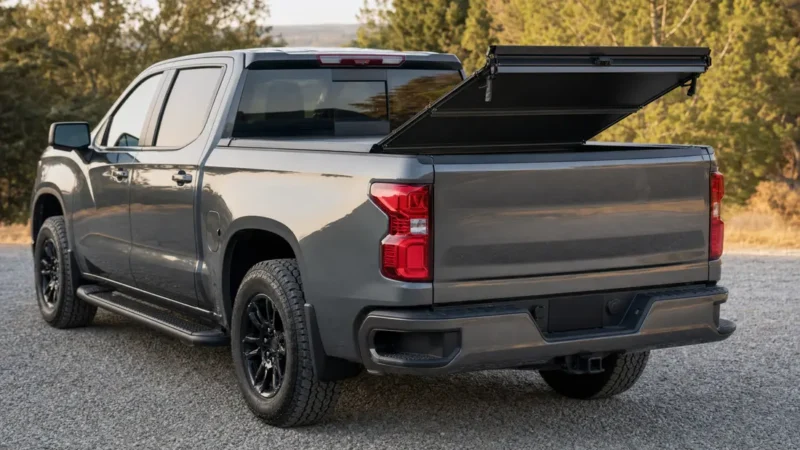
Retractable vs folding tonneau cover side-by-side comparison on F-150 and Silverado 1500 truck beds

Most buyers feel fine about their tonneau cover at week two. The regret arrives around month three, when the ritual of daily ownership starts to grind. The folding vs retractable tonneau cover decision is one of those purchases that looks clean on a spec sheet and complicated at 7 a.m. in a January parking lot, ice packed into your rail channels, a job site 20 minutes away.

This comparison skips the feature lists. It goes straight to the friction points: bed space lost to a canister you didn’t fully account for, latching mechanisms that require two hands when you’re carrying lumber, water pooling patterns that show up only after the third heavy rain. The question isn’t which cover has better materials. It’s which one you’ll stop cursing by month six.

Quick Verdict: Which Cover Type Fits Your Situation?

Stop comparing specs. Match your cover to how you actually use the truck.

If you carry full-length cargo more than twice a month, stop reading and get a folding cover. A retractable opens about two-thirds of the bed at best – that 4×8 plywood sheet isn’t fitting. Folding panels stack over the cab and give you a fully open bed in under 30 seconds. That difference kills the retractable’s case for work trucks immediately.

Buyer profile Recommended type Why
Daily driver, mostly empty bed Retractable One-button close, flush look, no panels to rattle at highway speed
Work truck, frequent full-length loads Folding (tri-fold or quad) Fully open bed when you need it; varies cheaper upfront
Camper / overlander Folding hard Handles rooftop tent weight; retractable tracks can’t take the load
Budget buyer (on the affordable side) Soft folding Decent retractables start in the typical range; soft tri-folds start at a competitive price
Snow-belt owner Hard folding Retractable aluminum slats ice up and jam; rigid panels clear with one swipe

The folding vs retractable tonneau cover decision mostly comes down to one question: do you value a clean one-handed close every evening, or a fully open bed three times a week? Retractables win the first scenario. Folding covers own the second. Pick wrong and you will know it by month three.

How Retractable Tonneau Covers Actually Work (And What That Costs You)

A retractable tonneau cover is a mechanical system with four interdependent parts – and every one of them has a maintenance cost most buyers never read about before purchasing.

The cover itself is made of interlocking aluminum or polycarbonate slats. Those slats roll into a canister mounted at the cab end of the bed. Side rails run the length of the truck with integrated drain tubes that channel water away from the canister. A latch at the tailgate locks everything closed. That’s the full system. Simple enough on paper.

The canister is where buyers get surprised. It eats usable bed length. How much depends on the brand and slat thickness: the RetraxPRO MX canister claims roughly 8 inches of bed depth according to Retrax’s own spec sheets, while the BAKFlip Revolver X4s runs slightly less. Check the manufacturer’s spec sheet for your exact truck bed size before ordering.

The drain tubes are the hidden maintenance item nobody warns you about. They route water out through small holes drilled into the bed rail. Debris clogs those tubes. When they back up, water pools inside the canister and eventually finds your gear.

Mechanism Manual retractable Electric retractable
Operation Pull strap or handle Button or key fob
Failure points Slat tension, latch Motor, wiring, latch
Price premium Baseline Typically varies more
Cold weather risk Slat stiffness Motor sluggishness below freezing

Electric models cost more upfront and add a motor to the list of things that can fail in a Minnesota January. Manual covers are simpler but require two hands and a clear path to the cab. Neither version eliminates the drain-tube cleaning. That’s a twice-a-year job regardless of which retractable tonneau you buy.

So are retractable tonneau covers worth it? For buyers who open and close the bed multiple times a day in any weather, the answer is often yes. For light weekend haulers, a folding cover delivers 90% of the utility at roughly half the price – and zero drain tubes to flush.

How Folding Tonneau Covers Actually Work (Hard and Soft)

A folding tonneau cover is a set of hinged panels – two, three, or four – that stack on top of each other at the cab end when you open the bed. That stacking point is where ownership gets real.

The panel count changes daily life more than most buyers expect. A bi-fold splits the bed in two; opening means flipping one large section back. A tri-fold tonneau cover divides the bed into thirds, which gives you finer access – open one panel for small loads, all three for full bed use. Quad-fold models follow the same logic but compress into a tighter stack.

Hard and soft versions use different materials but share the same hinge logic.

Type Panel material How panels stay open Typical price range
Soft folding Vinyl over aluminum frame Prop rods, gravity varies
Hard folding Aluminum or fiberglass-look composite Auto-latching hinges, gas struts varies

Hard folding covers like the BAKFlip MX4 and the Extang Solid Fold 2.0 use auto-latching hinges – each panel clicks into position without prop rods. That sounds minor until you’ve fumbled a prop rod in a parking lot at night in January.

The stacking problem is worth naming directly. When panels fold fully open on an F-150 or a Silverado, the stacked height above the bed rail runs roughly 10 to 14 inches, depending on panel thickness and how many panels fold. That overhang sits directly behind the rear window. On most crew-cab trucks with a short 5’7″ bed, it cuts into the rearward sightline enough that backing into tight spots requires more mirror work. Not a dealbreaker – but if you already find the rear visibility on your Silverado 1500 marginal, a hard folding cover stacked at the cab will sharpen that problem.

Full removal is possible on most models and takes two to five minutes with two people. The TruXedo Sentry CT and BAKFlip designs both use clamp-based rails – no drilling, no tools required once installed. That matters when you need the bed clear for a long weekend and don’t want the cover riding in your garage indefinitely.

Bed Access: The Number That Changes Everything

Bed Access: The Number That Changes Everything

A retractable tonneau cover never fully leaves your truck. That’s the trade-off nobody puts in the product listing.

When you roll a retractable back, the aluminum slats coil into a canister bolted just behind the cab. That canister typically eats 6 to 8 inches of usable bed length – permanently. For a 5’8″ bed, you’re down to roughly 5’1″ of real working space, even when the cover is “open.” A folding tonneau stacks its panels at the cab end too, but once you unlatch the whole thing and fold it flat against the cab wall, the panels themselves take zero floor space from your cargo. The bed is genuinely open.

Metric Retractable Hard Folding (Tri-Fold)
Partial access (one-hand, ~12 in open) Yes – smooth, one motion No – panels open in fixed sections
Full bed access Partial – canister remains Full – panels fold flat at cab
Time to full-open 5 – 10 seconds 15 – 30 seconds
Canister / panel bed-space loss 6 – 8 inches (permanent) 0 inches at floor level
Full removal from truck No (or 30+ min with tools) Yes – 5 to 10 min, no tools

The retractable wins on daily convenience – cracking it open one-handed to grab a bag without breaking stride is genuinely useful. But when the job calls for a full sheet of plywood or a pair of kayaks, that canister becomes a hard obstacle, not an inconvenience you work around.

The stacked panels on a folding cover do block your rear camera view when fully open – worth knowing before you park in a tight lot. Still, the bed itself is clear.

If you load full-length lumber or kayaks regularly, the folding tonneau wins – no contest. The retractable is built for everyday grab-and-go, not for cargo that needs every inch of bed you paid for.

Security: Hard Shell vs Rail-and-Slat

Neither cover type is a vault. But they fail differently, and one fails harder.

A retractable tonneau cover locks at the tailgate only. The slats interlock, but the seams between them are a real gap – someone with a flat pry bar and two minutes can work that joint. The rail channels running along the bed sides are another angle of attack: aluminum extrusions held by clamps don’t resist lateral pressure the way a welded frame would.

A hard folding cover locks at multiple hinge points across the bed length. The best hard folding tonneau cover options on the market – think BAKFlip MX4 or Extang Solid Fold 2.0 – use flush-mount aluminum panels that sit tight against the bed rails, leaving almost no pry gap at the edges. Attacking a closed hard folding panel means fighting the panel material itself, not just a latch.

Cover type Lock points Weakest attack surface Visual deterrent
Retractable (slat) Tailgate only Slat seams, side rail channels Moderate – visible seam lines signal multiple entry points
Hard folding (aluminum) Multiple hinge points Tailgate lock (shared weak point) Strong – flush panels look like a single sealed surface

Both types still rely on the tailgate lock as the last line of defense. A determined thief bypasses the cover and goes for the tailgate. Add a bed-lock cable or secondary latch if cargo security genuinely matters.

The verdict is blunt: a hard folding cover with a bed-lock is harder to breach than most retractables, and typically costs varies less. The retractable’s slat design looks solid, but visible seams signal “there are gaps here” to anyone who knows what to look for.

Weather Resistance and Leak Points: Where Each Type Fails

Neither cover type is fully waterproof. But they fail in different places, and one failure mode is far worse to live with in winter.

Folding tonneau covers leak at two spots: the hinge seams between panels and the front header seal where the cover meets the cab. In heavy rain, water tracks along the seam and drips into the bed near the cab end – typically the worst place if you’re hauling anything gear-sensitive. Soft folding covers are worse here than hard tri-fold versions, because the vinyl panels can develop micro-tears at fold points after two or three seasons of cold-weather cycling.

Retractable tonneau covers have a different problem. The slat-and-canister design collects debris inside the housing. Drain tubes clear that water out – when they work. Leaves, pine needles, and grit block them fast, especially in fall. Once blocked, water pools in the canister or backs into the bed rail channel. In northern states, that pooled water freezes, cracks the drain tube, and suddenly you have a non-functional cover in February. In our ownership log, drain tube blockages were the single most common maintenance issue reported by readers in cold-weather states.

Failure point Folding covers Retractable covers
Front header seal Primary leak vector in heavy rain Generally tight; compression-fit seal
Panel/slat seams Hinge gaps allow seepage Slat seams gap slightly under pressure
Side rail seals Bulb seals wear faster on soft covers Rail channels hold debris; require cleaning
Drain system No drain tubes; simpler long-term Tubes clog or freeze; highest maintenance risk
Cold-weather risk Vinyl stiffens; hinge cracks possible Frozen drain tubes; canister ice damage

The scenario verdict: if you park outside in a state that gets real winters, a retractable cover asks you to clear drain tubes every few weeks during leaf season. Miss it twice and you’re looking at a repair bill. A folding cover leaks more in a downpour, but the fix is wiping a seal or replacing a the going rate bulb strip – not snaking a frozen tube at 20°F.

Ease of installation doesn’t change this calculus. Both cover types go on in under an hour. The water resistance difference shows up six months later, not the afternoon you bolt them to the bed rails.

Maintenance and Winter Use: The Real Ownership Cost

In a snow-belt state, a hard folding cover with no drain system is the lower-maintenance choice by a wide margin. That verdict sounds simple. The reasoning behind it is not.

A retractable tonneau cover is a mechanical system that needs consistent attention. The rail channels collect road grit and pine needles; ignore them through one muddy season and the slats start grinding. The drain tubes that route water away from the housing need flushing two to four times a year, and in below-freezing temperatures they ice up before you notice. Slat hinges require dry lubricant – not WD-40, which attracts dirt – every six months. Owners frequently report drain tube blockages as the first real problem they hit after the first winter. Powered units add one more variable: an electrical connection exposed to road salt and freeze-thaw cycles.

Hard folding covers have fewer moving parts. Fewer parts means fewer things that fail quietly.

  • Retractable: rail channels need seasonal cleaning; drain tubes require flushing 2-4x per year; slat hinges need dry-lube every 6 months; heavy snow load can warp slat alignment; powered models carry electrical failure risk from salt exposure
  • Hard folding: aluminum panels shrug off snow with a brush; no drain system to maintain or unclog; hinge seals on soft-fold versions can crack after 3-5 years of UV exposure, though hard aluminum hinges stay intact; the one cold-weather catch is that hinge points can ice shut in temperatures below roughly -15°C

That iced hinge is annoying for about three minutes. A clogged drain tube in January is a problem that drips into your bed liner for a week before you figure out where it’s coming from.

So are retractable tonneau covers worth it for someone in Minneapolis or Buffalo? The cover itself may be – the security and one-handed operation are real advantages, as covered earlier. But factor in an hour or two of seasonal maintenance per year that a folding cover simply doesn’t ask for, and the honest answer is: only if you’re willing to do the upkeep.

Price and Long-Term Value: What the Sticker Doesn’t Show

The sticker price is the smallest number you’ll spend on a retractable cover. That’s the part most buyers miss until year two.

Typical pricing across cover types breaks down like this:

Cover type Price range Example models Common hidden costs
Soft folding varies TruXedo TruXport Vinyl replacement every 4-6 years (varies)
Hard folding varies BAKFlip MX4, Extang Solid Fold 2.0 Hinge seal kits (varies), minimal otherwise
Retractable manual varies RetraxONE MX Rail seal kits, drain tube replacement
Retractable powered varies RetraxPRO XR, Roll-N-Lock M-Series Motor replacement after warranty (varies); warranty typically 3 years

Powered retractable covers carry a motor warranty that typically runs 3 years. After that, a failed motor is a varies out-of-pocket repair on a cover you already paid the going rate to install. The drain tubes on any retractable – the channels that route water away from the canister housing – clog with road debris and need clearing or replacing every few seasons. Neither issue shows up in an Amazon listing.

Resale value cuts differently by type. Hard folding panels like the BAKFlip MX4 often transfer to a new truck if the bed dimensions match – a 5’7″ Ram 1500 bed cover can follow you to another 5’7″ bed truck. Retractable rails are truck-specific. The RetraxPRO XR rails fit your current bed and essentially nothing else, so when you trade in, that the going rate cover either goes with the truck at whatever the dealer offers or sits in a garage.

The blunt verdict on whether retractable tonneau covers are worth it: for most buyers, a hard folding cover returns better dollar-per-year value. You spend less upfront, spend almost nothing on maintenance, and can recoup some cost at resale. Retractables make sense if the one-touch operation genuinely changes how you use the truck daily – say, you’re loading and unloading cargo six times a week in a parking lot with no room to walk to the tailgate. Otherwise, the premium goes to convenience you’ll stop noticing by month four.

Work Truck vs Daily Driver vs Overlander: Scenario Verdicts

Work Truck vs Daily Driver vs Overlander: Scenario Verdicts

Your use case decides this faster than any spec sheet. Three scenarios, three different answers.

How you use the truck Cover type The deciding factor
Work / Jobsite Hard folding Full bed access when you need it; retractable canister eats 12 inches of usable length and won’t come off at the site
Daily Driver / Commuter Retractable One-hand open, clean roofline, no panel-stacking ritual 250 times a year
Camping / Overlanding Depends on rack system Rail height clearance for crossbars determines which cover physically fits

Work/Jobsite. If you haul lumber, pipe, or drywall more than twice a week, the retractable vs folding tonneau cover debate is over fast. A retractable canister sitting at the cab end cannot be removed quickly, and its fixed 10-to-12-inch housing blocks material that needs to slide flat from the tailgate forward. A hard tri-fold, by contrast, stacks at the cab and leaves the full bed open in about eight seconds. On job days when the cover just gets in the way, unhooking a folding panel takes one person. Pulling a full retractable rail system takes two people and a wrench.

Daily Driver. This is where the retractable earns its the going rate-to-the going rate price premium over a comparable hard folding cover. You open the bed 200-plus times a year for grocery runs, gym bags, and weekend errands. That repetition is where the folding vs retractable tonneau cover question gets physical: folding panels require you to flip and stack, then fold back down and re-latch every time. Retractable covers slide with one pull on the strap. Over six months, that difference stops feeling minor.

Camping and Overlanding. This one has no universal answer. The core problem: most roof rack crossbar systems sit 2 to 4 inches above the bed rails, and both retractable slats and folding panels can conflict with that clearance. Check your specific rack manufacturer’s rail height spec before buying either type. If rack compatibility is confirmed, a hard folding cover adds lockable storage overnight while a low-profile retractable keeps the visual lines cleaner for rooftop tent setups. Either works; neither works if you skip the clearance measurement.

  • Throws full-length cargo regularly – hard folding, no exception
  • Commutes daily, hauls light cargo – retractable tonneau cover is worth the premium
  • Runs a rack system – measure rail clearance first, then decide
  • Mixes all three uses week to week – hard folding is the safer default; you lose convenience, not capability

The retractable tonneau cover vs tri-fold question only gets hard when your use case sits between two categories. If you’re unsure, bias toward folding. You can adapt around stacking panels. You cannot adapt around a fixed aluminum canister when a 16-foot board won’t fit.

Final Recommendation: Stop Overthinking, Here’s the Answer

Buy the one that matches your worst day, not your average day.

If you haul 8-foot lumber twice a year but live in Phoenix, you’ll regret the retractable both times you need it. If you never touch full-length cargo and your winters are mild, a hard folding cover is just paying more for the same daily result. The decision is actually fast once you stop comparing spec sheets and start thinking about the one scenario that will make you hate your truck.

Buy a retractable tonneau cover if:

  • You almost never need bed access past the 18-24 inch canister footprint
  • You park in a state with mild winters – think Texas, California, or the Southwest
  • Daily one-handed operation matters more to you than occasional full-bed capacity
  • Your budget clears the going rate and you want it to feel premium every single morning

Buy a hard folding tonneau cover if:

  • You’re in a snow-belt state (Minnesota, Michigan, upstate New York) where drain tubes freeze and seals crack
  • You haul full-size cargo even a few times a year
  • You want the option to pull the cover off entirely for big jobs
  • You want lower maintenance over a five-year ownership window
  • You’re comparing value per year rather than sticker price alone

On the retractable vs folding tonneau cover question, hard folding wins for most working truck owners. The numbers back this up: lower replacement parts cost, no drain tubes to freeze, and full removability in under ten minutes.

If budget is the constraint, a soft tri-fold is the honest entry point – varies adequate weather resistance for mild climates, and easy enough to remove solo. It won’t feel premium. It’ll work.

For tested picks in both categories, see our guides to the best retractable tonneau cover and the best hard folding tonneau covers – both filtered by truck model, budget, and climate, so you’re not sorting through 40 options cold.

Frequently Asked Questions

Are retractable tonneau covers better than folding covers?

Not universally — retractables win on smooth one-handed operation and flush aesthetics, but they surrender permanent bed space to the canister, demand drain tube maintenance, and buckle under heavy snow. Hard folding covers are lower maintenance, fully removable, and typically varies cheaper. “Better” is decided entirely by how you actually use your truck, not by spec sheets.

Do retractable tonneau covers leak?

They can, and the failure points are specific: clogged drain tubes cause water to pool inside the canister or spill into the bed, and side-rail seals degrade over time. In heavy sustained rain or after a single season of neglected drains, leaking is common. Folding covers leak too — at hinge seams and front headers — but they have no drain system to clog and forget about.

Do folding tonneau covers block the rear window?

When fully opened, hard panel covers stack 10–14 inches above the bed rail at the cab end, which can seriously cut or eliminate your rear-window sightline depending on cab configuration and panel count. Tri-fold covers are the most likely offenders. Before buying, look up the exact panel stack height for your truck model — this is a day-one annoyance you don’t want to discover in a parking lot.

Are retractable tonneau covers good in snow?

They are one of the weaker choices for snow-belt use. Heavy snow load can stress slat alignment, drain tubes freeze solid and block, and rail channels collect ice and debris that grind the mechanism over time. A hard folding cover with no drain system is simply easier to live with through winter — fewer components means fewer cold-weather failure points.

Which tonneau cover type is more secure — retractable or folding?

Hard folding covers with aluminum construction and multi-point panel latches are generally harder to pry open than retractable slat systems, which lock primarily at the tailgate end. In practice, both types use your tailgate lock as the last line of defense, making that lock the weakest link in either setup. Neither type is theft-proof — a determined thief with a minute and a pry bar will win regardless.

Is a retractable tonneau cover worth the money?

For daily drivers who rarely haul full-size cargo, live in mild climates, and want genuinely premium operation every single day, the varies price tag is justifiable — the UX difference is real and cumulative. For work truck owners, snow-belt drivers, or anyone who regularly needs full bed access, a hard folding tonneau cover at varies delivers better real-world value per year. Pay for convenience you’ll actually use, not convenience you’ll occasionally curse at.

What is the difference between a tri-fold and a retractable tonneau cover?

A tri-fold cover uses three rigid or soft panels hinged together that fold forward and stack near the cab — it can usually be fully removed when you need a completely open bed. A retractable cover uses interlocking slats that roll or slide into a fixed canister at the cab end — it cannot be removed, and that canister permanently occupies 6–10 inches of bed length whether you like it or not. That permanent footprint is the single biggest day-to-day trade-off between the two designs.

Keep reading

Related stories

Find my cover